

Before Death: Choosing Green or Natural Burial
Jump ahead to these answers:
Before Death: Choosing Green or Natural Burial
August 7th, 2025Today, it is more common for people to question the environmental impact of conventional funerals. That impact includes toxic chemicals used in embalming, caskets made of precious materials like exotic hardwoods and metals, and tombstones that permanently alter the landscape-avoidable things that jeopardize worker health and local ecosystems. But there are alternatives. Natural, or green burial, which seeks to mitigate the environmental impact of death, has recently been growing in popularity.
What is green burial? How are green funeral services different from conventional funeral services? Is green burial more environmentally friendly? How much does green burial cost? What laws govern funeral services? In collaboration with the Green Burial Council, this section of SevenPonds seeks to answer any questions you might have on green funeral services.
Things to Know:
- Not all green burial sites are the same. Some sites attempt to preserve the land in its natural state, but others do not. Some guarantee the land is preserved in perpetuity, but others do not.
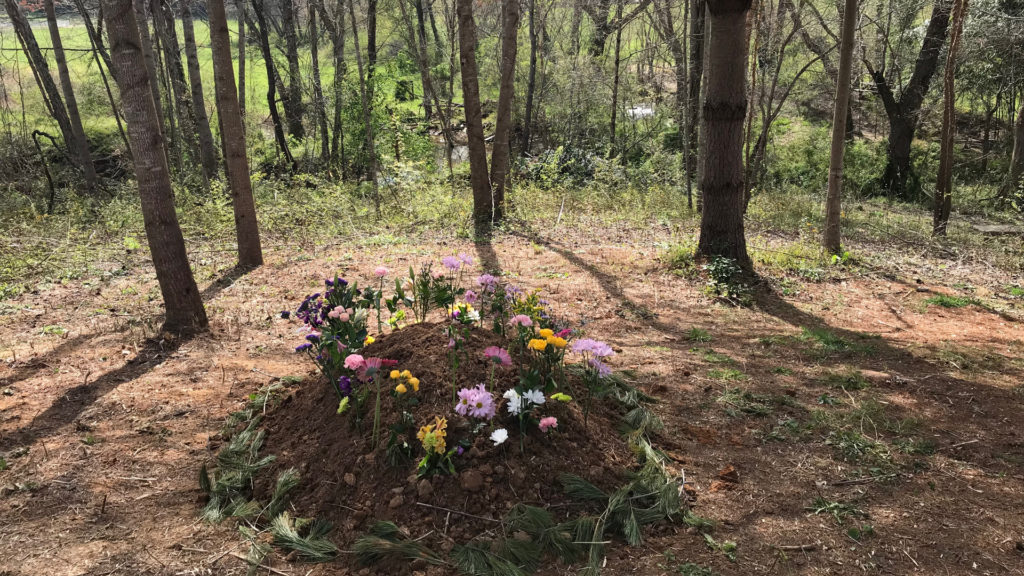
- With green burial, the body is typically buried in a shroud of natural materials, or in a decomposing container, such as a wicker casket or pine box.
- If you are interested in conducting a home funeral, many state laws allow the family to keep the deceased at home before green burial. Research your local laws fully before solidifying your plans.
- You may be able to arrange for green burial on privately owned land if you plan well in advance.
- Be aware that not all products sold as “natural” or “green,” necessarily are. The word “natural,” after all, has no legal definition. Currently, the Green Burial Council offers the most widespread and comprehensive certification program and education surrounding the topic.
What is green burial?
Many Americans had their first look at green burial, also called natural burial, in 2005, when the HBO drama series Six Feet Under concluded with the death of funeral home owner Nate Fisher. Nate’s unembalmed body was buried in a shroud on a plot of land in a nature preserve. The Green Burial Council defines green burial as an environmental burial, employing “minimal environmental impact,” “legitimate ecological aims,” and a “conservation of natural resources.”
How common is green burial?
While green burial has only recently become more widely discussed, the practice of embalming, a keystone of conventional funerals, did not begin until the American Civil War. The families of soldiers, killed far from home, agreed that the bodies be preserved and returned to them in a more viewable state. Before then, all Americans had a green burial, free of toxic embalming chemicals. Many populations have never adopted embalming. For example, Orthodox Jews and Muslims have practiced burial without embalming for thousands of years. For more information about what the embalming process involves, see “Embalming: What You Should Know” by the Funeral Consumers Alliance.
Though only a small number of Americans today opt for green burial, the practice has been gaining in popularity. In an AARP online poll, 45% of participants indicated they would choose green burial over traditional burial or cremation, when given the choice. As of November 1, 2024, there are 470 green burial cemeteries in the United States and Canada, and we can expect that number to increase in years to come. Although it’s possible to bury an unembalmed body in a casket at a traditional cemetery, a truly environmentally sound burial should take place at a site specifically designated for green burial. Some people have even been able to negotiate county and state laws to arrange for green burial on privately owned land. To find an operating green burial site or a green burial site under development, you can visit the Green Burial Council.
Are all green burial sites the same?
The Green Burial Council distinguishes three levels of green burial sites, at varied levels of conservation strictness:
- Hybrid burial grounds can refer to a section of an otherwise traditional burial cemetery that has been designated for green burials of unembalmed bodies and caskets or shrouds.
- Natural burial grounds are exclusively green burial sites, and are required to adopt a number of policies to minimize waste and conserve energy. Natural burial grounds prohibit the burial of bodies embalmed with toxic chemicals, and caskets made from non-organic plant material, as well as the use of cement or metal vaults or traditional grave markers.
- Conservation burial sites, the strictest green burial classification. They are established in partnership with an independent conservation organization, such as a land trust, or the land includes deed restrictions, double protecting the land from development via conservation and burial law. The land is thoughtfully stewarded with conservation practices to maintain its inherent, natural value. For more information, see the Green Burial Council’s Burial Grounds Standards.
What is the process for green burial?
Make sure that you have a green burial site in your area, though some people are willing to drive hundreds of miles to have a green burial. You can also find a funeral home, with a refrigeration unit, willing to refrigerate and transport the body, without embalming it. A funeral may be held at home before the body is transported to the burial site. Alternatively, a memorial service or life celebration may be held long after the body is buried. For more information, see the SevenPonds discussions on Preplanning a Funeral or Memorial Service or Planning a Funeral or Memorial Service.
In a green burial, the body is buried in a shroud of natural materials or a decomposable container, such as a wicker coffin or pine box. At natural burial grounds, the burial location may be marked with an engraved natural fieldstone or quarried stone. However, conservation burial grounds, where the natural integrity of the land is preserved, often do not allow permanent markers. Instead, conservation burial sites use GPS systems, survey pins, and mapping to locate gravesites, protecting the land in its natural state.
What should I expect of a green burial service or ceremony?
Green burials are often the most engaging burial option. Some green cemeteries allow mourners and participants to involve themselves in nearly every level of the process if they wish, transporting the body, bearing the body from the coach to the grave, lowering it into, and digging and filling the grave, with stipulations to ensure the participants’ safety. For some people, this is one of the most welcoming aspects of green burial — it can be a loving, personalized way to say goodbye.
What if I want to conduct a home funeral?
Home funerals are a natural precursor to green burial, and some families find them highly soothing and therapeutic. Home funerals, in which the service is conducted at home, with the body present and the decedent’s loved ones conducting the after-death care, are best suited for deaths that occur in the home. But if the death occurred in a hospital, in most cases, the family can still request that the body be transported to their home.
At the time of death, the family of the deceased obtains the death certificate and necessary supplies for preparing and cooling the body, typically with dry ice, before transporting it directly to a green burial site. Only eight states- Connecticut, Illinois, Indiana, Louisiana, Michigan, Nebraska, New Jersey, and New York- require the involvement of a funeral director in the death process. It is legal to care for your own dead with home-based after-death care in 43 states, including California. However, such laws can vary considerably and are sometimes even contradictory. For more information, see the National Home Funeral Alliance for their national support directory, their free home funeral guide, and state-by-state list of laws that need to be followed, Or read SevenPonds’ discussions on Preplanning a Home Funeral or Planning a Home Funeral.
Why does natural or green burial have a low impact?
Green burial is environmentally sound because the body returns naturally to the earth. Many green burial sites also preserve land where native plants and animal life flourish. Conservationists claim that green burial, especially burial on conservation burial sites, can be a valuable land conservation tool. Green burial does not include toxic embalming chemicals, unsustainably harvested hardwoods, concrete grave-liners, or vaults. Nor does green burial cause the same fossil fuel consumption and harmful emissions associated with cremation.
How much does green burial cost?
Green funerals can cost less, the same, or even more than conventional funerals; it all depends on the services and merchandise you choose. However, it can be highly cost-effective; caskets can cost as little as $500, and burial shrouds even less than that. Green burial bypasses many additional expenses such as embalming, limousines, vaults, headstone carving, and chapel services in the funeral home. But, of course, prices vary widely according to the type of green burial site, the geographic location, and the services provided. Sometimes, green burial can even be more expensive than conventional services. For example, conservation burial grounds seek to perpetually maintain their site in its natural state, and therefore may require higher fees for ongoing preservation. For more information, see SevenPonds’ article on Options for Green Burial.
Are there any special considerations?
The same state laws that govern conventional funerals and cemeteries apply to green ones. As with any death-related purchase, you should select your providers with care. It is best to preplan to secure your wishes, and those wishes are even more secure if the finances are protected for this purpose. However, be thoughtful about how your funeral services will be paid. There are many options for securing your finances for your funeral plans, not just the ones that the funeral industry provides you.
To ensure the site will be maintained in the future to the highest environmental standard, try to select a burial preserve or green cemetery with a perpetual care fund and that is certified with the Green Burial Council.
Most green burials occur within 2-3 days due to the body’s decomposition. If you choose to bypass a funeral home, you can preserve the body yourself by using cooling methods, such as dry ice, water ice, or ambient temperatures. — reference this study manual prepared by Undertaken With Love for further information. If you choose to use a funeral home, make sure they have a refrigeration unit. In some cases, funeral home operators may not be willing to keep a body refrigerated until transportation for green burial. If a funeral provider insists the body must be embalmed, be sure to know your rights, as protected by the Federal Trade Commission’s Funeral Rule. Only in rare instances do state or local laws require embalming. For more information, see “Embalming: What You Should Know” by the Funeral Consumers Alliance.
What about green burial on private property?
You may be able to arrange for a green burial on private property owned by yourself, by friends, or by relatives. However, you must be sure to follow all local regulations and begin the planning process well in advance. Generally, states do not have laws governing burial on private property. As a result, decisions are often left to counties and towns. Most will allow for private property burial, but each area has slightly different requirements. Often creating a survey or map of your property is necessary to provide notice to future owners. It is a good idea to begin by speaking with your local county planning department. Back to top ↑
What makes a green burial product, service, or business really “green”?
Unfortunately, not all products marketed as “green” or “natural,” actually are as environmentally sound as you may be led to believe. With the public’s growing interest in environmental impact and green burial, many in the funeral industry see this as an untapped market, and they are rushing to cash in, even though their products may not necessarily meet the standards they purport to represent. Remember that “natural” has no legal definition, which is why you see it plastered across the packaging of so many decidedly synthetic foodstuffs. Just because vaults are made of concrete, and concrete contains natural materials like rock and sand, this does not mean that burying it underground causes no harm to the environment. Cement, the key component in concrete, is associated with high emissions rates during manufacturing.
Today, the only organization that offers research-based certification of after-death products and services is the Green Burial Council. You can read about their standards here. If you see the Green Burial Council logo, then this product, funeral home, or cemetery has been certified by their standards. If you do not see this seal, you may request that the seller prove their environmental claims, or you may contact the Green Burial Council directly by visiting their website, calling or emailing- www.greenburialcouncil.org; info@greenburialcouncil.org; 888-966-3330. Back to top ↑
For more information:
The Green Burial Council
www.greenburialcouncil.org
Funeral Consumers Alliance
www.funerals.org
National Home Funeral Alliance
https://www.homefuneralalliance.org
Additional Resources from the GBC
https://www.greenburialcouncil.org/books_blogs_articles_videos.html
Grave Matters: A Journey Through the Modern Funeral Industry to a Natural Way of Burial
by Mark Harris
www.amazon.com/Grave-Matters-Journey-Through-Industry/dp/0743277686Going Out Green: One Man’s Adventure Planning His Own Natural Burial
by Bob Butz
www.amazon.com/Going-Out-Green-Adventure-Planning/dp/0981870813