Composting Bodies is Now Legal in 14 States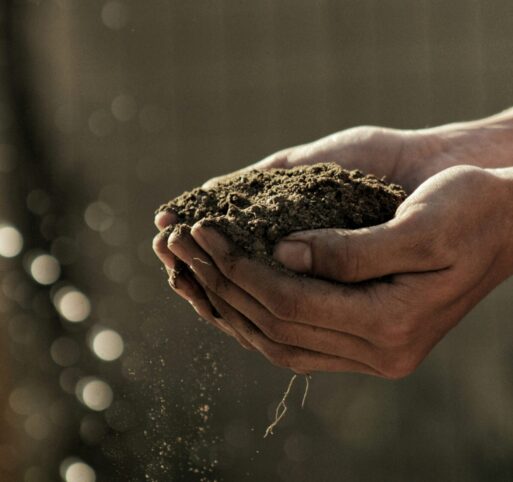
Composting bodies can enrich the soil.
Credit: Photo by Gabriel Jimenez on Unsplash
New Jersey Governor Phil Murphy recently signed a bill making the Garden State the 14th state to legalize a process known as natural organic reduction (NOR), or human composting. The practice, which first gained legal approval in Washington state in 2019, has steadily grown in popularity as people look for more environmentally friendly alternatives to traditional burial and cremation.
Human composting gently transforms remains into nutrient-rich soil that can support plant life and rejuvenate the landscape, making NOR a process that appeals to those who want their final act to align with their ecological values.
What Is Body Composting?
Human composting is a process that transforms a body into nutrient-rich soil over the course of weeks. Unlike cremation, which releases carbon dioxide and other pollutants, or traditional burial, which can involve embalming fluids and non-biodegradable caskets, this method offers an earth-conscious return to the natural cycle.
Developed and popularized by companies like Recompose, the process involves placing the body in a vessel filled with organic materials like wood chips, straw and alfalfa. Oxygen, moisture and microbial activity do the rest. After five to seven weeks in the initial vessel, according to Recompose, the soil is removed from the vessel and placed in a curing bin for an additional three to five weeks.
The entire process generates approximately one cubic yard of soil (about a truckload), according to sustainable burial company Earth Funeral, but families don’t need to take it all. Earth Funeral packages the remains in 32 ounce biodegradable containers, making it easy for loved ones to take as much as they’d like to scatter the compost in places that are meaningful, or use it to nourish houseplants, trees, or flower gardens. The remainder is then donated to local projects for land restoration initiatives.
Why It’s Gaining Momentum
The environmental impact of traditional burial and cremation is high. Cremation in the U.S. alone was estimated in 2019 to emit over 360,000 metric tons of CO₂ annually, while cemetery burials each year involve more than 4 million of gallons of embalming fluid and large amounts of land.
In contrast, human composting:
- Avoids harmful emissions: No fossil fuels are burned.
- Uses less space: It doesn’t require permanent cemetery plots.
- Creates life from death: Families can use the resulting soil to plant memorial trees or restore degraded ecosystems.
- Aligns with natural cycles: It’s a fundamentally ecological process that mirrors how animals and organic matter decompose in nature.
- Where It’s Legal Now: As of the writing of this article, human composting is legal in 14 states — Arizona, California, Colorado, Delaware, Georgia, Maine, Minnesota, Maryland, Nevada, New Jersey, New York, Oregon, Vermont and Washington.
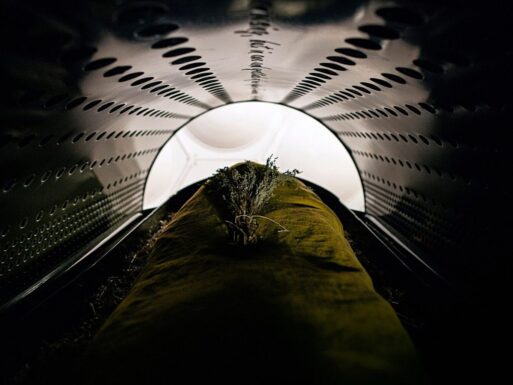
Recompse in Seattle is one of the national providers of human composting.
Credit: Recompose.com
The Cost and Planning
For many, choosing human composting is not only an ethical or environmental decision — it’s a practical one. The cost typically ranges between $4,000 and $7,000, making it comparable to cremation and significantly less expensive than a traditional funeral and burial, which can exceed $10,000.
Families can choose to:
- Have a ceremony or memorial with the body present before the process begins.
- Receive the composted soil to use personally or donate it to conservation projects.
- Make arrangements in advance, much like prepaying for a traditional funeral, or arrange it at time of need.
According to NJ.com, human composting is not yet available locally anywhere on the East Coast, as states who have recently legalized the practice have yet to develop the necessary infrastructure. However, residents wishing to undergo the process can have their remains flown out of state to a regulated facility, an arrangement that most human composting companies assist with as part of their service.
Common Questions
Is it safe?
Yes. A pilot study of the process in 2018 in Washington state showed that by the end of composting, pathogens and pharmaceuticals are neutralized through the high heat of microbial activity.
Can religious or cultural practices be honored?
In many cases, yes. Human composting providers like Recompose offer flexibility in how loved ones are honored and are working with religious leaders to bridge the gap between tradition and sustainability.
What happens to things like pacemakers or artificial joints?
These are removed prior to composting and either recycled or safely disposed of.
Can this be done anywhere?
Only in states where it is legal, but laws are evolving rapidly. Some individuals transport remains across state lines to undergo composting legally.
Looking Forward
Human composting represents more than just a new form of after-death care. It’s a shift in how we think about life, legacy and our connection to the planet. Instead of leaving behind emissions or granite headstones, we can leave behind forests, gardens, and renewed soil.
As public awareness grows and legal barriers fall, body composting may soon become a standard option — helping us, even in death, give something meaningful back to the Earth.
This post has been updated to reflect the fact that New Jersey’s law went into effect in September of 2025.





 Final Messages of the Dying
 Will I Die in Pain?