Grief Altars Are No Longer Just for the Home
Macy’s shows sensitivity to its employees by displaying an altar allowing co-workers to say their goodbyes.
Credit: Suzette Sherman
Grief altars and shrines that were once confined to the home are appearing in unexpected locations, even in the workplace and shared community spaces. Traditionally associated with religious and cultural traditions, modern grief altars reflect a broader shift toward openly and creatively honoring grief and loss in a contemporary way.
COVID-19 Pandemic May Have Led to More At-Home Altars

This bookshelf houses an altar honoring a deceased teen and is a daily part of the family’s life.
Credit: amieross_ on TikTok
Several factors may contribute to the growth of altars in homes and work settings. Back in 2020, the COVID-19 pandemic disrupted traditional mourning practices.
In her 2020 paper on rituals during the pandemic, psychology professor Evan Imber-Black wrote in the journal Family Process, “Couples married fifty or sixty years were separated in death. Adult children could not say goodbye to parents. Victims of COVID‐19 died alone. No family member identifies a body, resulting in a profound ambiguity.”
The result, Imber-Black reports, is that people sought solace in rituals and memorials within the safety and sanctuary of their homes.
Pop culture has also contributed to the growing popularity of dedicated grief spaces. Pixar’s animated film “Coco” introduced the global audience to the Mexican tradition of the ofrenda, a central element of the holiday Dia de los Muertos.
Ofrendas are colorful altars adorned with food, photos, candles, and other cherished items to honor and remember loved ones who have passed away. “Coco’s” heartfelt story offered families — especially children — a meaningful way to connect through shared memories and explore the concept of loss.
Social media and creative culture seem to be normalizing this tangible expression of grief. Artists, designers and everyday people post photos of their altars online. These beautiful, intimate, deeply personal displays are more than decoration. As one licensed professional art therapist explains, altars are therapeutic tools that can be used for “healing and processing various life experiences, traumas, or losses.”
The Expansion of the Home Grief Altar
At home, grief shrines and altars serve as a physical representation of memories and a way to honor the bond with the deceased.
These spaces can include:
- A framed photo
- Candles or incense
- Favorite items of the departed
- Natural elements like flowers, stones and leaves
- Handwritten notes or prayers
For some, visiting the grief altar becomes a daily ritual, a place to remember and feel. Others build them seasonally to mark meaningful milestones like anniversaries and holidays. Some transform an everyday piece of furniture into an altar of great meaning in the home. Whether minimal or more elaborate, these memorials invite healing through presence and reflection.
Honoring Grief in the Workplace
As a 2025 essay in Forbes notes, there is little precedent for formally addressing grief in the workplace. One organization, The Dinner Party, is trying to change that with an initiative called Workplace Resilience.
In some workplaces, employees are taking steps to create change: In offices, factories and shops, colleagues come together to remember team members who have passed away. What was once a moment of silence at a meeting has evolved into small, meaningful gestures such as grief altars placed in break rooms or shared lounges.
At one job site, employees took the lead, as reported in a 2024 essay in Forbes written by the head of a health care organization. While there’s no consensus on what to do when a colleague dies, some workers feel the need to let people at least remember their co-workers.
Employees created a serene memorial with a bench and surrounding trees. They hung engraved ornaments with the names of departed colleagues and friends. Like a grief altar, these personalized mementos encourage others to reminisce and reflect on those who have had a significant impact on their workplace and their lives.
Los Angeles Magazine in 2020 reported about an ofrenda honoring those essential workers affected by COVID-19, a memorial that offered colleagues a shared way to process grief. Grief is no longer being “left at the door.” Some organizations now recognize that bereavement is an integral aspect of life that deserves recognition, space and support.
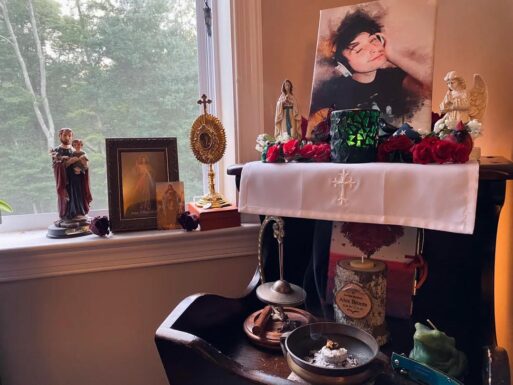
This memorial altar for a teen boy who passed away blends the tradition of the parents with the contemporary lifestyle of a young boy.
Credit: Memorial Altars on Reddit
The Power of Ritual
For many individuals, creating a grief altar is an act that goes beyond mere symbolism. It serves as a metaphorical bridge, allowing them to navigate complex emotions while retaining a bond with the deceased.
In a world where grief can feel invisible and immeasurable, altars offer something physical to hold onto. For some who are grieving, altars serve as a reminder that memory and love endure beyond death, becoming a presence woven into everyday life.





 Final Messages of the Dying
 Will I Die in Pain?