Virtual Reality Exposure Therapy for Near-Death Experiences May Reduce Death Anxiety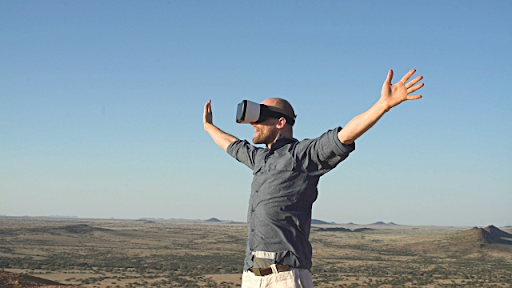
a person wearing a virtual reality headset (not related to the study)
Death and mortality are often considered taboo subjects in many cultures, especially in many parts of North America and Europe. Thoughts surrounding death may even bring about anxiety and stress for many, which can interfere with daily life. While normalizing and exposing oneself to one’s mortality can help reduce these anxious thoughts through exposure therapy, researchers and medical professionals have yet to find a way to “expose” those with death anxiety, or thanatophobia, to the experience of dying—until now.
Researchers have discovered a method to yield positive results in exposing people to near-death experiences using virtual reality (VR) simulations.
According to a 2025 study published in Frontiers in Virtual Reality, sixty-one young adults who participated in an 11-minute VR near-death experience showed a major reduction in both death anxiety and perceived stress levels following the simulation.
Near-death experiences (or NDEs) may be a helpful treatment for death anxiety after all. “Most researchers in this field believe that NDE gives valuable insights about death and the dying process to the experiencers (NDErs). Anxiety and fear of death reduce in many NDErs,” noted research published in the Journal of Emergency Healthcare by the Department of Medical Ethics and Philosophy of Health at Shiraz University of Medical Sciences.
The research team was led by Texas A&M University after they realized that traditional exposure therapy would not be effective when it comes to treating death anxiety. Exposure therapy can work well for other fears, such as heights or spiders, through gradual exposure to the fear. Obviously, the only way to expose yourself to death is to die; the VR simulation aimed to change that.
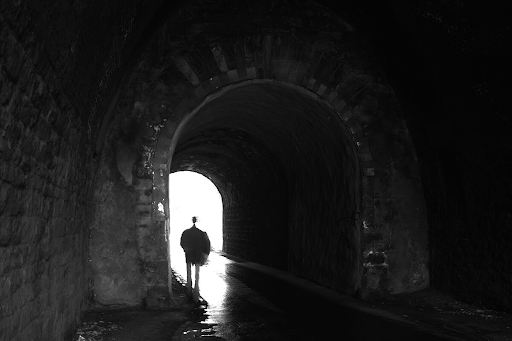
The VR simulation used in the study was developed by the International Association for Near-Death Studies. It guides its participants through common elements reported in actual near-death experiences. Typically, the simulation exposes its witnesses to scenes from a first-person perspective, such as a car accident that leaves one in a coma. The experience includes common phenomena, including floating above one’s own body, traveling through light tunnels, encountering peaceful landscapes, or even meeting departed friends and family before returning to life. There were two versions of the simulation, one with a male narration of the experience and one without. Both versions proved equally effective.
The results, while preliminary, were noteworthy; participants’ average death anxiety scores started at around 8.5 (out of 15) and dropped to around 7.0 after the VR experience. In clinical terms, it brought them from slightly above the normal range of death anxiety into a healthy, normal range. Stress levels also significantly declined, and participants reported feeling relaxed and reflective afterwards.
Many rated the simulation as “relaxing, meditative, and a peaceful escape from stress.”
One participant reflected, “It was eye-opening! I am afraid of dying, but I had never thought about what I might see near death. It was also relaxing and made me think about death differently.”
Another participant even wanted to experience it regularly: “I wish I could try it more than once. Maybe every night before going to bed! I think the day would be more meaningful to me in this way! Appreciating every moment. Because I got to die last night and live again!”
The immersion of VR allowed those to experience or confront their feelings of mortality in a safe and controlled environment, which may reduce fear of the unknown. Peaceful imagery and narratives can trigger a relaxation response that reduces physiological stress symptoms. It can also prompt existential reflection, as reports from participants showed shifting their mindset toward a more positive perspective on life.
Not all the results were positive, however. 27% of participants actually experienced increased death anxiety, and 35% reported higher stress levels. These results show that not everyone will benefit from such experiences, and that appropriate screening and monitoring should be applied before electing patients for such experiences. It should also be noted that no control group was added to the study.
The test group focused on relatively healthy young adults, mostly university students, facing average academic pressures. This group was a preliminary test before applying the intervention to more vulnerable groups, such as those with terminal illnesses or older adults.
The participants offered some suggestions to improve the experience, such as more tailored experiences or the option to hear their own voice instead of a narrator’s. Some indicated that narrators with a voice too different from their own decreased immersion.
VR technology is becoming more accessible and affordable, and this kind of support could be made available to many groups of people if proven to be successful with all population groups. In the future, VR could prove a powerful tool for addressing death anxiety and the societal issue of avoiding death and mortality in its entirety.
“It reminded me that I need to live life more fully, and I appreciate that,” one participant noted.
Perhaps that’s a reminder we could all use once in a while.




 Final Messages of the Dying
 Will I Die in Pain?