Movie Review: “Come See Me In The Good Light,” Produced by Tig Notaro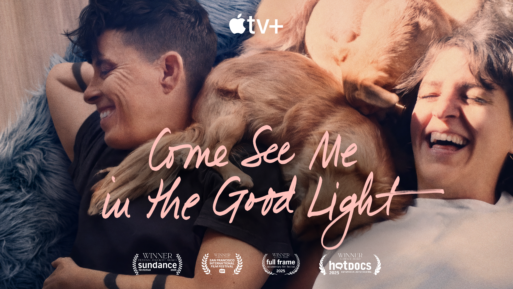
Andrea Gibson and Megan Falley laughing together in the trailer for “Come See Me In The Good Light”
Credit: Apple+TV
The 2025 film, “Come See Me In The Good Light,” follows poet/activist Andrea Gibson (whose pronouns are “they/them”) and their partner Megan Falley as they navigate the time Gibson had left after receiving a diagnosis of terminal ovarian cancer.
One might think that a documentary about a spoken-word poet who was dying of incurable cancer would be schmaltzy; too reliant on the kind of self-impressed navel-gazing that many associate with that art form. But Gibson, with their talent for stirring profound emotions with simple words, is able to comment upon their mortality without any pretentious airs.
The film, directed by Ryan White and co-produced by Tig Notaro, honors Gibson’s life and art by being a moving testament to love, loss, and the fullness of life. As White said of the film, “We thought we were making a documentary about dying, but we quickly realized it’s actually a documentary about living.”
Andrea Gibson’s Life and Poetry
Andrea Gibson is a master wordsmith, despite their self-professed limited vocabulary (a challenge they humorously lean into, after a well-intentioned criticism from their first publisher.) “Think about how good of a writer and poet I have to be, to write as many poems as I did using only the same five words,” they jokingly tell Falley, who is also an acclaimed poet and writer. “Think about how many more tools you have than I do; it’s like I built a house with a screwdriver!”
If you are unfamiliar with Gibson’s poetry, you will learn throughout “Come See Me In The Good Light” that they don’t need anything more than a “screwdriver” to craft something incredibly poignant. Reading from one of their poems, Gibson shares: “My story is about happiness being easier to find once we realize we do not have forever to find it.”
Come See Me In The Good Light
The documentary does a remarkable job of staying true to that statement. Despite being there alongside Gibson and Falley for those difficult moments, like when they anxiously read test results that tell them the status of Gibson’s cancer progression, the movie feels incredibly life-affirming. Sprinkled between scenes of the couple crying and discussing their feelings about Gibson’s diagnosis are moments of laughter and joy. The two often express a sense of appreciative wonder at the world surrounding them, despite having lived lives that strayed from the easy road early on.
About five minutes into the film, Gibson says: “I think, understanding that we’re all mortal, that we’re all going to say goodbye to this world, and to each other, in some ways, and goodbye to our bodies eventually… it wakes you up. Immediately it’s like your eyes are wide and you’re kinda awestruck to the brevity of it all. And I don’t wanna waste a second.
… I was wasting a lot of seconds, prior.”
Who Should Watch
If you’re looking for something simple and light-hearted, this isn’t that kind of entertainment. You will need tissues, and maybe a reassuring hand to hold. But “Come See Me In The Good Light” is uplifting, in its own way, and will make you stop and consider your relationship with time and everything (and everyone) around you. People who have dealt with body issues, health issues, navigating queerness, or illness, or death will all see bits of themselves represented here; anyone who hasn’t grappled with those subjects should watch the movie to get a taste of what it can feel like, and how dealing with the difficult aspects of life head-on can offer a rare glimpse of beauty where you least expect it.





 Final Messages of the Dying
 Will I Die in Pain?