“Love Letter from the Afterlife” by Andrea Gibson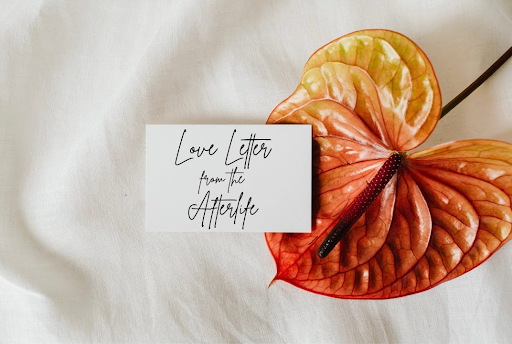
Credit: Andrea Gibson, Substack
My love, I was so wrong. Dying is the opposite of leaving. When I left my body, I did not go away. That portal of light was not a portal to elsewhere, but a portal to here. I am more here than I ever was before. I am more with you than I ever could have imagined.
So begins Andrea Gibson’s “Love Letter from the Afterlife,” a poem that reads as a letter to a surviving loved one written by someone who has died.
It reframes grief and loss in a heartfelt way, rather than defining death as a separation or departure from life and loved ones — it even begins by stating that death is actually not a departure at all.
Many interpret death as leaving this world, their loved ones and their life as they know it. Gibson, instead, writes that “dying is the opposite of leaving” and that the “portal of light” commonly associated with the end of one’s life is not a gateway to another world or plane of existence, but a return to worldly connections.
The poem provides many metaphors to show that a lost loved one’s presence still remains after death. Grief becomes evidence of the love shared with someone who has died, and they remain connected through body and soul.
I know that to be human is to be farsighted. But feel me now, walking the chambers of your heart, pressing my palms to the soft walls of your living. Why did no one tell us that to die is to be reincarnated in those we love while they are still alive? Ask me the altitude of heaven, and I will answer, “How tall are you?”
One of the most noteworthy metaphors in Gibson’s poem describes the heart as a garden. When mourning tears fall, they can help nourish life there in the form of flowers.
When you cry I guide your tears toward the garden of kisses I once planted on your cheek, so you know they are all perennials.
The poem goes on to show that there are small moments in life that prove that a lost loved one is still present in their life, even more so than before they died, like at a coffee shop when you accidentally order coffee for two when it is no longer necessary. The words serve to turn these moments of heartache into a reminder that those who are grieving are closer to the lost loved one than they have ever been.
Do you understand? It was me who beckoned the stranger who caught you in her arms when you forgot not to order for two at the coffee shop. It was me who was up all night gathering sunflowers into your chest the last day you feared you would never again wake up feeling lighthearted. I know it’s hard to believe, but I promise it’s the truth. I promise one day you will say it too– I can’t believe I ever thought I could lose you.
Gibson is no stranger to grief. The artist and writer, who uses they/them pronouns, is known for works that explore gender, identity, love, activism, trauma, and mortality. They were diagnosed with ovarian cancer and ultimately died at 49 in July 2025 after a four-year battle. These works come from deeply personal places and shaped their final years. “Love Letter from the Afterlife” was published in December 2023 as a message of comfort for those grieving.

Andrea Gibson
Credit: Wikimedia Commons
It certainly serves that purpose. Love persists even through grief, and death often shows us how poignant a loved one’s absence is from our lives. They do remain, as they dwell in the heart and soul of those who loved them and knew them.





 Final Messages of the Dying
 Will I Die in Pain?