A Portrait Lost and Found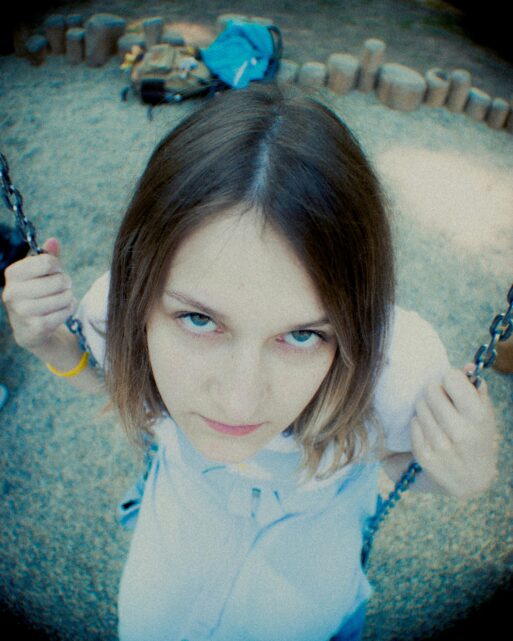
Kate as a young child.
Credit: Unsplash
This is Kate’s story, as told by Aurora Wells, about navigating the death of her beloved grandmother — how acting out of character helped her through grief to “accept my grandmother’s death.” Our “Opening Our Hearts” stories are based on people’s real-life experiences with grief and loss. By sharing these experiences, we hope to help our readers feel less alone in their grief, and ultimately aid them in their healing.
My grandparents moved to Chicago in the 40’s, but never lost their accents. My dad said my grandma hoarded things because they had led such difficult lives back in Russia—but it was impossible not to laugh when she tried to pawn random junk off on my dad as we packed the car for our drive back to Minnesota.
“Child, you need toaster?”
“No, Mom, we have a toaster.”
“Here, you take toaster.”
“My sister and I laughed so hard we cried… Our grandpa, a Russian Orthodox minister, simply shook his head.”
Once, when my dad scoffed at the roll of paper towels she extended in his direction, she waved it with measured agitation, responding, “No, Child — it is not ass wipe! It is paper towel. You should take!”
My sister and I laughed so hard we cried (“No, Child…” remains our inside joke to this day.) Our grandpa, a Russian Orthodox minister, simply shook his head.
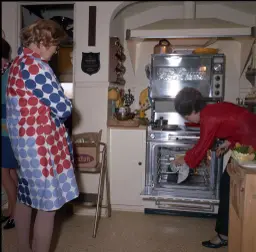
Kate’s memories of her grandmother in the kitchen cooking.
Credit: Public Domain
I remember cauliflower florets draining on paper towels spread across the kitchen counter. My grandma cooked heavy Russian food with dubious, ‘old-person’ hygiene; passing on fried cauliflower, my sister and I feasted on Frango mints and turtle chocolates and cordial cherries from the candy tins Grandma stockpiled.
I remember the time my grandma took us to her favorite junk shop. I was maybe fourteen or fifteen, and had a ball, ferreting through piles of trash in search of treasure. Finally, I found it: a silver ring with inlayed turquoise. My dad, clearly annoyed at the destination his mother had selected for our family outing, said firmly that I didn’t need any more jewelry. My grandma looked shocked.
I still wear the ring she bought me that day.
“It shook me to see my dad so overwhelmed with grief … and it shook me further that I couldn’t cry. It’s not that I didn’t feel sadness—I just didn’t feel there.”
I was twenty-one when she died. Diagnosed with bone marrow cancer, she had been placed in hospice care within two months. I was incidentally in Chicago that warm summer weekend, partying with friends from college. I was staying with the hipster cad—I mean, aspiring photographer—I had been obsessed with freshman year. You could say Jake and I had a “friends with benefits” relationship.
We were laughing. I was staring at a precarious castle of shot glasses and empty beer cans when my mother called.
I had never even seen my father misty-eyed, but at my grandma’s wake the next day, he was struggling to breath through the tears. It shook me to see my dad so overwhelmed with grief… and it shook me further that I couldn’t cry.
It’s not that I didn’t feel sadness — I just didn’t feel there. Not really.
My mom was angry that I didn’t want to go home with my family. But I felt like I’d put in my time, and I joined my friends again after the service.
Many hours later, higher than a kite, I landed among a group of tattooed performance artists; I felt simultaneously absorbed and completely detached—like an anthropologist, or a ghost.
“He asked me not to go; he started drawing on my skin with Sharpies like freshman year, back when we covered each other in bleeding ink like pheromones — back when pretense was still custom.”
I told Jake I wanted to go straight to bed that night. In the morning, I dressed to leave. He asked me not to go; he started drawing on my skin with Sharpies like freshman year, back when we covered each other in bleeding ink like pheromones—back when pretense was still custom.

Kate reflecting back on the pictures Jake took of her nude as a way to deal with her first loss.
Credit: Kate’s personal photo
Jake told me he was putting together a portfolio for a photography fellowship. He asked me if I would model. I said yes. He said, “I need you to take your clothes off.” It seemed like an odd request, but I shrugged okay.
He undressed me, slowly and meticulously. I was standing for the first roll of film. Then he posed me on the couch. Then he moved my thighs apart. He got closer and closer until I said, “I’m leaving now.” He promised to send me the prints.
…But he never did.
“Now I think back on those indelible, lost frames and wistfully recall that moment in time, young and untethered.”
It may not make any sense, but those photographs helped me accept my grandmother’s death. The decision was out of character for me—it felt at once transgressive and boldly vulnerable. I think, more than anything, I was just looking for raw evidence that I was there.
Now I think back on those indelible, lost frames and wistfully recall that moment in time, young and untethered. The memory tastes like the salty heat of an aimless summer—however muddled with bitters and whiskey.
It’s incredible, really. Somehow, photographs I’ve never seen managed to perfectly capture my loss.
Article originally published in 2012.





 Final Messages of the Dying
 Will I Die in Pain?