On TikTok, Maddy Baloy Shared Her Final Days With Candor and Humor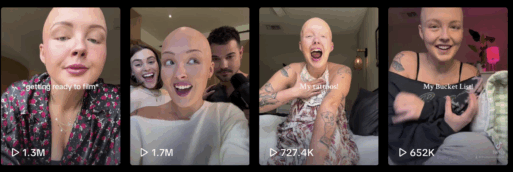
Maddy smiles for the camera as she talks about her life with stage 4 cancer.
We’ve probably all felt a pang of sadness when encountering a story about a child with terminal cancer. But less common in the media, and almost as poignant, are the accounts of someone in their early 20s having to make end-of-life plans.
While the idea of never outgrowing childhood is tragic, someone facing the end of life at a time when their peers are just launching theirs ranks high on the life-isn’t-fair list. A child, after all, hasn’t built a vision board with everything they hope to find and enjoy, from an ideal partner and a fulfilling job to an assortment of bucket-list-worthy adventures.
Madison “Maddy” Baloy was a high-profile example of that kind of cruel fate. A kindergarten teacher in St. Petersburg, Florida, she was diagnosed with stage 4 cancer at age 24. She documented her final days on TikTok last year, posting vlogs and heartfelt monologues that garnered an audience in the millions. Her mother, Carissa Talmage, shared memories of that period in People magazine this month, a year after Maddy’s passing at age 26.
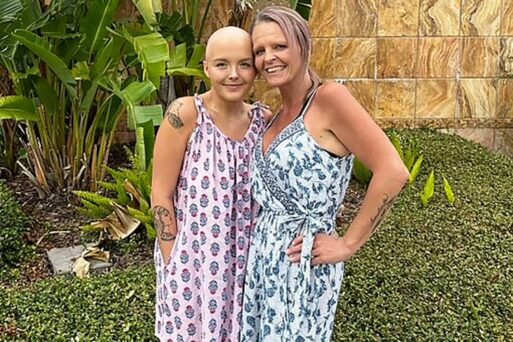
Credit: Courtesy Carissa Talmage
“Madison’s journey wasn’t just about battling cancer; it was about acceptance,” Talmage wrote in a personal essay for the magazine.
“From the moment of her diagnosis, she was forced into a reckoning far deeper than medicine could reach. Doctors gave her four to six weeks to live. I remember them telling her, ‘If we can get you six months, start living your bucket list.’ Imagine being just 24 years old, newly fitted with an irreversible colostomy and told to start dying. Without warning, plans for the future became preparations for the end.”
And therein lies the hell of a terminal diagnosis before one has reached the quarter century mark.
When confronted with such a devastating turn in life’s trajectory, one can choose to laugh or cry, and Maddy chose the former. As she told People last year, “My mind shifted, and I was like, ‘I am going to get every ounce of life that I can out of this. There’s nothing we can do. So I may as well have some fun.”
 Rocking that philosophy, she left a bigger impression on the world than most of us will make in a normal lifespan, drawing a large following with her engaging disease-be-damned attitude that belied her circumstances. For example, in one of her videos, we see a surprisingly cheerful, closely shorn young woman in a baggy sweatshirt breezily announce: “Hi, my name is Maddy. I’m 25 years old. I have stage 4 cancer and it’s spreading all over my belly. Come spend the day with me, because I don’t know how many I have left.”
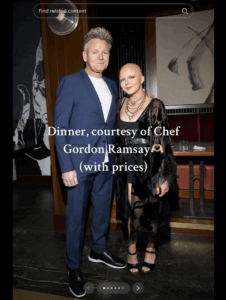
Maddy was true to her intention to make the most of her final days, managing to check some choice items off her bucket list, including meeting celebrity chef Gordon Ramsay and getting a tattoo with her grandmother. She kept going until she no longer could.
Maddy had her mother and friends, and an outpouring of support on social media to help her endure, and even find some joy, in her final days. But how does one really cope with a truncated stay in this world?
About 80,000 young adults aged 20 to 39 are diagnosed with cancer each year, according to the American Cancer Society, and about 9,000 die from the disease.
A 2020 study found that women in their 20s and 30s are much more likely to be diagnosed with cancer than men of the same age, mainly because of the higher incidence of breast cancer, skin cancer and thyroid cancer in women.
Making End-of-Life Plans
To help young adults deal with the emotional turmoil and sense of helplessness that typically accompany an end-stage cancer diagnosis, the National Cancer Institute offers a structured approach for thinking through how to best manage their physical and emotional needs during the time that remains. The online article guides readers through the process with these prompts:
My hopes and priorities for the time ahead:
Who and/or what brings me comfort:
What makes me feel better physically:
What scares me:
What I want to avoid:
What I want my family and friends to know:
What I need from my health care team:
The article helps the reader consider all of these issues, pointing to helpful resources such as the 2010 book “Planet Cancer: The Frequently Bizarre Yet Always Informative Experiences and Thoughts of Your Fellow Natives,” which chronicles the experiences of other young adults.
The article also recommends Voicing My Choices, a planning guide designed to help adolescents and young adults “make end-of-life choices that might otherwise be delayed or avoided.”
Bottom line, if you or some young adult you love is trying to cope with end-stage cancer or other terminal disease, know that there are resources that are available to help navigate every aspect of end-of-life challenges.
And as far as coping emotionally, it’s doubtful you’ll find a better example than Maddy Baloy.





 Final Messages of the Dying
 Will I Die in Pain?