“Tears” by Kay WalkingStick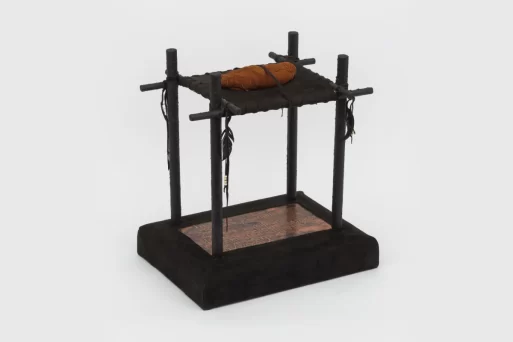
Artwork: Kay WalkingStick, 1990. Photography by JSP Art Photography
Kay WalkingStick has experienced her fair share of loss. As a member of the Cherokee Nation, her ancestors were victims of the genocide and forced relocation of Indigenous peoples by new settlers to the continent. Over a fifth of the Cherokee population is estimated to have died along the Trail of Tears.
Such a profound loss of history and culture is not only tragic but also difficult to describe in words. Many in Indigenous populations have used art as a means of expressing grief, telling stories and preserving their history. It’s something that WalkingStick thrives at, and her career as an artist has flourished over six decades.
Through “Tears,” at The Museum of Modern Art in New York City, WalkingStick provides her own form of expression and preservation.
WalkingStick created the model of a funerary scaffold in 1990, during the 500th anniversary of Christopher Columbus’ “discovery” of the land that is now the United States of America. The sculpture memorializes and honors the Indigenous nations that have been eliminated in the centuries since.
“In 1492, we were 20 million. Now, we are 2 million. Where are the generations? Where are the children? Never born,” reads a poem engraved in copper on the piece.
In an online interview on the MoMA site, WalkingStick — who notes that her name is Adolanvsdi in Cherokee — discusses her life and art.
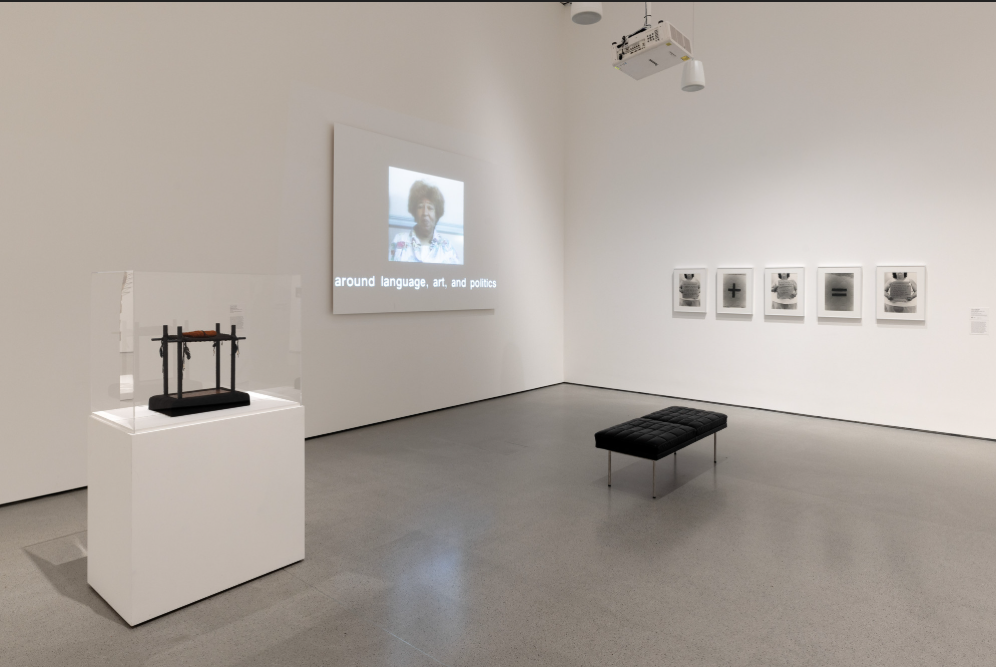
Artwork: Kay WalkingStick, 1990. Photography by Robert Gerhardt. Museum of Modern Art.
Funerary scaffolds were commonly used among many nomadic or migratory Indigenous cultures. WalkingStick explained of burning remains on scaffolds, “They were returning to nature, but they were also rising up in smoke, so that they were presented to the universe.”
WalkingStick used animal hides, wood, feathers, corn, beads, bone, Anasazi pot shards and other natural materials to create the model. In fact, the piece is made of entirely natural materials except for the acrylic paint. She also included a piece of leather from her late husband’s shirt to honor him: “He died young, and I think part of ‘Tears’ was also my own grief. It’s amazing how little rituals like this help one deal with things.”
A bundle intended to resemble a human figure rests on the top of the scaffold. The piece’s materials and composition provide a thought-provoking and intimate look into both cultural and personal loss.
Art provides an excellent outlet for expressing and processing grief for many people, and WalkingStick is no exception.
As she says of “Tears,” “This is about native people and native grief, but also my own personal grief.”
“Tears” is on permanent display as part of the “500 Years” exhibit.





 Final Messages of the Dying
 Will I Die in Pain?