Looking for an Eco-Friendly Burial Option? Coral Reef Memorials Support New Life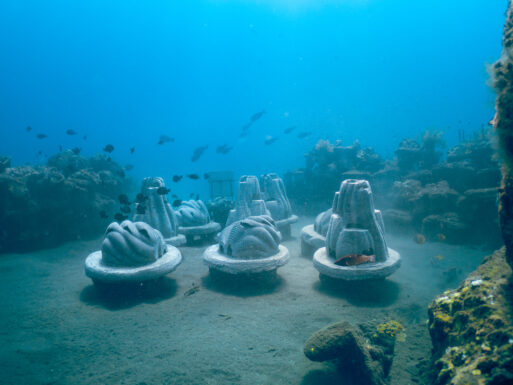
Coral Reef Memorials are advertised as an eco-friendly solution to regular burials. Credit: Resting Reefs
A growing number of people are searching for environmentally conscious burial options. Indeed, according to the National Funeral Directors Association in 2024, “68% would be interested in exploring ‘green’ funeral options … up from 55.7% in 2021.”
A recent entry into the green burial market is Resting Reef, whose mission is “to provide an environmentally friendly, meaningful and impactful alternative to conventional methods of commemorating a loved one, with a new tradition around death that truly honours life.”
As reported in The Guardian recently, Resting Reef combines cremated ashes with crushed oyster shells and concrete and drops the resulting “reef structure” into the ocean. The idea is to regenerate marine ecosystems by providing an underwater surface that allows turf and coralline algae to grow and thus provides habitat for marine organisms.
Resting Reef started with pets and has plans to also make reefs out of human remains. Success in its pilot project in Bali in 2024 was immediate, co-founder Aura Murillo Pérez told The Guardian: “We have placed 24 memorial reefs for pet owners in the U.S., U.K. and other countries. The pilot project attracted 84 fish species and achieved fish diversity 14 times greater than nearby degraded areas.”
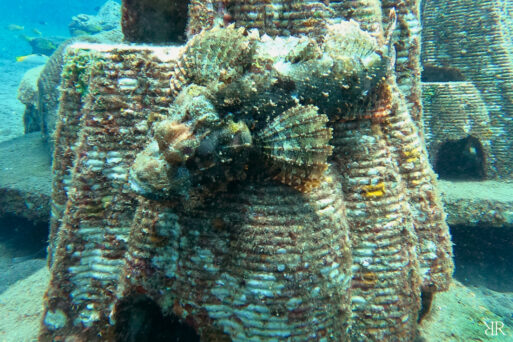
Resting Reefs Coral Reef Memorial covered in marine life. Credit: Resting Reefs
From the Ashes Comes New Life
The idea isn’t new: Florida-based Eternal Reefs in the late 1990s was founded by two friends whose scuba diving led them to want to take action to help the declining state of coral reefs. From that desire came “reef balls” — as the organization defines it, “permanent memorials placed on the ocean floor create new marine habitats for fish and other forms of sea life.”
Also in Florida is Neptune Memorial Reef, an underwater cemetery and new marine ecosystem. Marine Insight reports as of late 2024, “Coral is growing on the reef, and in just a year, it has become a lively ecosystem with spotted eagle rays, schools of snapper and grunts, smaller fish like puffers and damsels.”
While it’s true that reefs contribute to a healthier aquatic life, how environmentally sound is the practice overall?
Environmental Benefits of Coral Reef Memorials
The Green Burial Council notes reef balls require cremation, which pollutes the air: Earth Funeral estimates that one cremation is estimated to produce 535 pounds of carbon dioxide (the equivalent of a 609 mile car journey). And the manufacture of concrete also contributes to carbon emissions. (Resting Reef also plans to incorporate bone ash from water cremation.)
But among numerous environmentally conscious options, including human composting, alkaline hydrolysis (water cremation), green burial or sea burial, this one supports a badly endangered part of nature.
Known as “the rainforests of the sea,” coral reefs support the health and resilience of marine environments, protect coastlines and filter carbon dioxide. According to Coral Guardian, about 90% of them could disappear by 2050. They play a crucial role in maintaining the health of the planet. The Reef Ball Foundation — which partners with Eternal Reefs — says there are more than 750,000 reef balls in the oceans around the world.
Murray Roberts, professor of marine biology at Edinburgh University’s school of geosciences, told The Guardian he’s all for manmade reefs: “Corals and all sorts of animals grow better on structure. I can’t see an obvious downside.”





 Final Messages of the Dying
 Will I Die in Pain?