Green Goodbyes: Market Offers Options for Eco-Friendly Caskets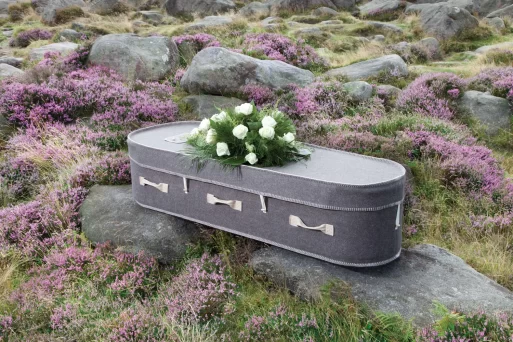
Pure wool biodegradable casket
Cedit: naturallegacyusa.com
As concerns about environmental challenges grow, more consumers are looking for ways to reduce their ecological footprint, even in death. According to the 2021 Green Funerals and Burial Survey, published in American Funeral Director magazine, 63% of respondents would consider a “green” funeral that incorporates eco-friendly practices.
This applies to coffins, too: nearly 56% of the people asked said that they would consider a biodegradable burial casket.The specifics when it comes to “biodegradable” coffins might surprise: Think mushroom and wool, for starters. For the true minimalist, there are biodegradable shrouds.
The Environmental Impact of Traditional Caskets
Traditional coffins are part of traditional funeral practices that raise several environmental concerns, as outlined in a 2021 study published in Illness, Crisis & Loss.
The manufacturing process for metal and fiberglass coffins contributes to deforestation and increased industrial carbon emissions. And because these materials are non-biodegradable, some caskets can take decades or even longer to decompose.
Logging for hardwood coffins disrupts ecosystems and depletes forests. According to The Berkeley Planning Journal, 30 million board feet of hardwood are harvested every year in the U.S. for wood casket production. These caskets also contain varnish and glue, which can seep out into soil and water over time.
Those interested in reducing their footprint in death can find a wide variety of practical and beautiful, earth-friendly options to choose from.
Bamboo
Bamboo is a highly renewable resource. In fact, it grows faster than any other plant on earth. It also offers aesthetic appeal, along with strength and durability, making it an ideal material for caskets.
Artisans handweave small strips of bamboo together to create a solid frame. Bamboo coffins may contain a natural cotton liner, and when placed directly into the earth, they break down naturally over time, much faster than more traditional casket materials.
Wool
Wool is another sustainable and fully biodegradable material used for eco-friendly caskets. Approved by the Green Burial Council, these caskets are typically made from pure, organic wool and lined with natural cotton. They have a base made from either sustainably sourced wood or recycled cardboard. Handcrafted wool caskets are chemical-free and fully decompose with time.
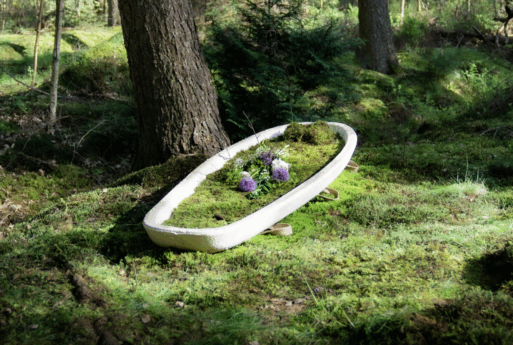
Loop “ForestBed” coffin recently introduced as a eco option
Credit: Loop-biotech.com
Mushroom
In June 2025, a Netherlands-based company, Loop Biotech, introduced its first mushroom casket in the U.S. These “living” caskets are made of mycelium, which is the underground structure of a fungus. Think of it as the “roots” of a mushroom.
Mycelium is highly efficient at breaking down organic dead matter and returning those nutrients to the soil, making it one of nature’s recycling superheroes. Lined with materials like moss, hemp, cotton, or wool, mushroom coffins decompose in as little as 45 days, improving soil biodiversity as they break down.
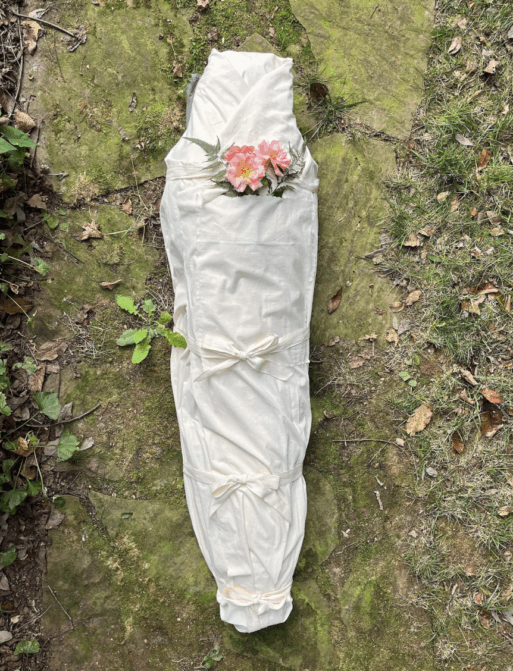
Etsy burial shroud by Simple Shroud<br/>Credit: etsy.com
Biodegradable Shroud
A simple shroud made from biodegradable materials is one of the most minimalist burial options available. An alternative to caskets and coffins, this simple wrap, crafted from hemp, linen or other natural fibers, can be used for direct burial or to prepare the body for cremation. Shrouds can be designed with handles for easy carrying and may be decorated to reflect religious or spiritual beliefs.
Before choosing an eco-friendly burial method, it’s important to check with local funeral homes and cemeteries to confirm they support green practices. Availability may vary by burial site, state and region. Understanding local requirements ensures that consumers’ end-of-life choices align with both their personal values and the regulations in their area.





 Final Messages of the Dying
 Will I Die in Pain?