“Medical Aid in Dying: A Guide for Patients and Their Supporters” by Lonny Shavelson, MD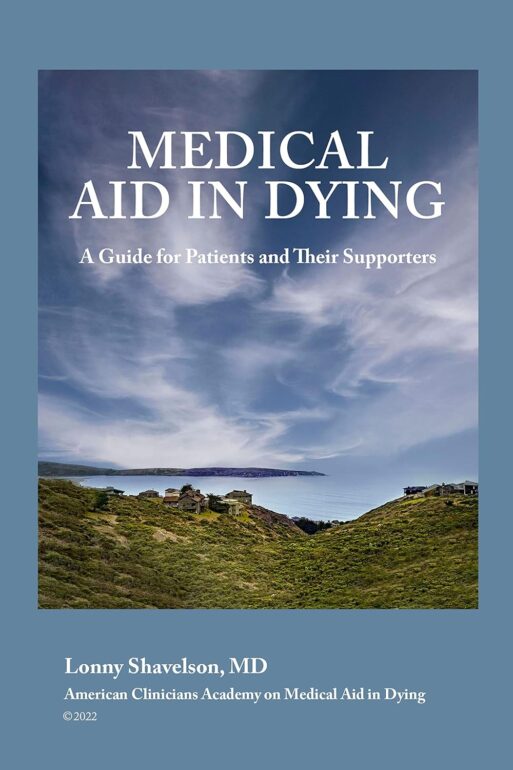
“Medical Aid in Dying: A Guide for Patients and Their Supporters” was born out of Dr. Lonny Shavelson’s years of firsthand experience, medical research and patient care in this evolving field. The 79-page booklet outlines the who, what, where, when and how medical aid in dying serves terminally ill patients as a justifiable means to end their life. As 11 states and Washington, D.C., now offer legal access to medical aid in dying, while several others have legislation pending, this book is a valuable tool to understand how the process unfolds overall.
Shavelson says that symptom relief should be a foremost concern for every terminally ill patient, regardless of their consideration to end life or not.
Readers are encouraged to examine all end-of-life choices, including hospice and palliative care, as an alternative or supportive means to achieving a death with dignity. Weighing all options, he writes, is essential in helping patients to recognize the many possible paths to a dignified death. And if someone plans to take lethal medications, but ultimately decides not to do so, they will have already secured the care and support they need to remain comfortable until life comes to its natural end.
How do you qualify if considering medical aid in dying?
All aid-in-dying states require that people meet the following guidelines to begin the process:
- Be over 18 years of age
- Live in a state (or establish residency) where aid in dying is legal
- Have a terminal illness with a prognosis of less than 6 months to live
- Have a mental capacity to make decisions about your own medical care
- Have two physicians that substantiate the health prognosis, one of whom must agree to be the prescribing physician
Although no one can predict exactly how or when someone will die, Shavelson believes clinicians should offer their patients honest expectations of disease progression and end-of-life expectations. If a specialist, palliative physician or hospice provider takes a neutral stance or offers little to no support for medical aid in dying as an option, contact the Academy of Aid-in-Dying Medicine for help in locating a referral in your area.
What happens after you qualify for aid in dying?

Shavelson was co-chair and keynote speaker at the 2023 National Clinicians Conference on Medical Aid in Dying in Portland, Oregon
There are mandatory waiting periods between a first and second request for aid in dying that vary from days to weeks per state. Shavelson notes that ongoing medical guidance is essential during these final days, particularly concerning the continued use of comfort measures. How well palliative or hospice providers ease end-of-life symptoms like pain, nausea, trouble swallowing, breathing or more can directly influence when or if a patient will ultimately choose to take lethal medications.
What if my family does not support my decision?
Shavelson offers guidance on how and why patients should initiate “deeply honest conversations” with loved ones. Whether their concerns are familial, personal, cultural or societal in nature, it is always better to resolve conflicts early in the process. A person choosing to end their life will need direct support on that final day. The more your family understands that this is your choice on how you will die, not if you will die, the less chance discord will overshadow the love they will want to feel for you as you take your last breaths.
What are aid-in-dying medications and how are they used?
The booklet simplifies the pharmacology. Lethal medications known as DDMAPh are used to end a person’s life. It is not an injection. It is also not a pill. DDMAPh is a combination of complex liquid suspension of sedatives and lethal medications that put a person into coma-type sleep within minutes, followed by a comfortable death within hours. This remedy is the result of years of improvements to provide the most available, safe and effective combinations of these medications for patients.
Powders must be measured and mixed with a liquid, self-administered by the patient, and ingested (swallowed within 2 minutes). There are instances when these medications may be self-administered by nasogastric tube or rectal tube plunger if a clinician is on site to facilitate proper placement of those for the patient. Shavelson’s booklet explains in more detail.
What happens on the day you decide to die?

Shavelson states, “Patients who are contemplating medical aid in dying need hospice care as much as, if not more than, patients who aren’t considering aid in dying.”
Family, friends, personal caregivers can all be present. Shavelson advocates that patients should additionally request the presence of an experienced attendant like a doctor, nurse, end of life doula or trained volunteer. Since there’s no such thing as a “typical death,” professionals can help to ensure a peaceful and less complicated death for the patient, as well as their family.
Ultimately, the decision of if or when to take medications to end one’s life is one of the most important and complicated choices a person will ever make. Much has changed since aid-in-dying laws were first enacted in 1997, but limits to accessibility for some remain relevant today. This guide offers up-to-date, comprehensive, and meaningful information to anyone who wants to learn more about it or plans to pursue it as an end-of-life option for themselves.
“Medical Aid in Dying: A Guide for Patients and Their Supporters” is available as a free PDF download. Paperback and Kindle versions can be purchased for a nominal fee on Amazon.
A copy of this booklet was also distributed to nearly 500 clinicians from around the country who attended the 2023 National Clinicians Conference on Medical Aid in Dying in Portland, Oregon.





 Final Messages of the Dying
 Will I Die in Pain?