“Field of Dreams” by Phil Alden Robinson
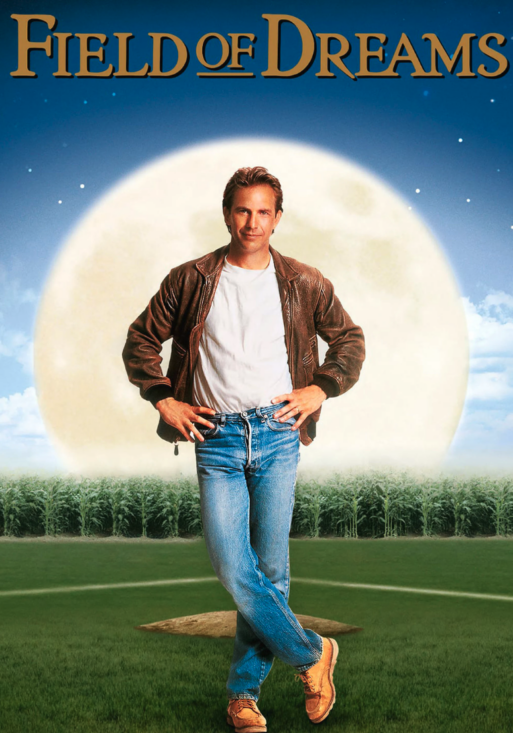 “Field of Dreams,” the sports fantasy film directed by Phil Alden Robinson, might not be explicitly about death — but it certainly presents an inspiring perspective on it.
As the film opens we meet Ray, a struggling farmer played by Hollywood heartthrob Kevin Costner, who has ploughed a small section of his cornfield in Iowa to build a baseball field because a mysterious voice told him to. “If you build it, they will come…”
From the surrounding corners emerges the ghosts of famous ball players from the 1919 Chicago White Sox team. The field that Ray has built possesses some kind of magic, a loophole in the Afterlife, so while on it the players get a chance to play baseball again.
The mysterious voice that demanded Ray build the field was not satisfied yet, though. Ray is sent on a quest to seek out Terence Mann, a controversial author and activist from the 1960s played by award-winning actor James Earl Jones, who had once harbored dreams of playing professional baseball. Then, the two are tasked by the unseen force to find Archie “Moonlight” Graham, who also had thwarted baseball dreams.
In the end, it gradually becomes clear that the mysterious voice has been orchestrating events in order to grant resolution to several characters, including Ray himself, who is given the opportunity to play catch with his estranged father.
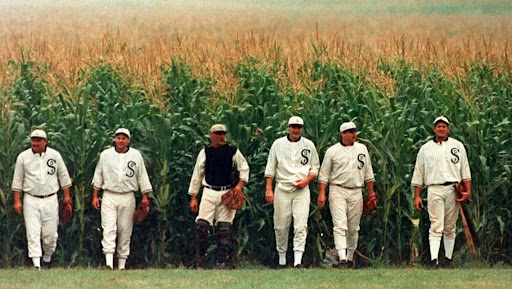
The ghosts of a legendary team of players emerge from the corn to play baseball
NBC Sports
A Meditation on Life and Loss
The Philadelphia Inquirer called the film “not so much about baseball,” but rather “dreams, magic, life and what is quintessentially American.”
As the scene towards the end of the film — when Costner and Jones pick up a hitchhiking ghost on the highway on the way back to the field — suggests, the field of dreams is a metaphor for existence. Hence, Ray’s subconscious desires to reconnect with his deceased father spawned a creative, intermediary space where they could meet again and potentially reconcile.
“Field of Dreams” is a meditation on processing loss, bereavement and our ability to move on. It explores the idea that our relationships with our loved ones continue even after their death, but with a new set of rules. In the case of the movie, the players can’t leave the field to join the living, and vice versa, so a real line exists between life and death.
The film, thoughtfully directed and written by Phil Alden Robinson, successfully evokes a dreamy atmosphere with a sense of gravitas. The story holds a fascinating perspective about existence and belief, which might encourage those who are grieving to expand their minds a moment to connect with their hearts.
We are remembered. We can get second chances, even after death, and we’re all working towards finding purpose. And it all began with a voice that rose within Ray that propelled him forward on the journey to make peace with his father on a baseball field. A true American myth.





 Final Messages of the Dying
 Will I Die in Pain?