Amy’s Choice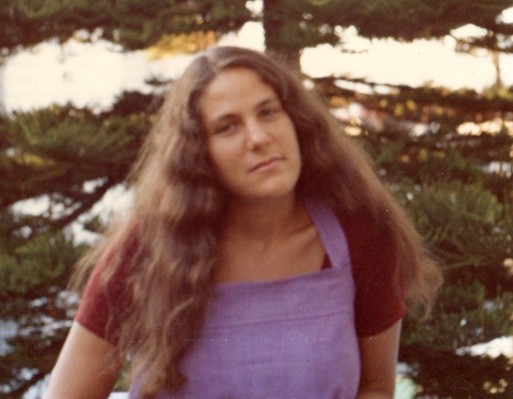
This is the story of Amy, written by her brother, Robert Lind. Our Opening Our Hearts series is based on real-life experiences. By sharing these stories publicly, we hope to help readers feel less alone in their grief and, ultimately, support them in their healing process. In this post, Robert reflects on losing his sister to breast cancer and how his family came together to create a spontaneous home funeral.
The following is an account of how my family coped with the death of my sister Amy in our own way by having a home funeral.
My sister Amy battled breast cancer for many years. Wanting to aid her in her quest for recovery, I flew to Ireland to secure an alternative cancer treatment for her. Unfortunately, this was to no avail. A few years later, at the age of 43, Amy became so ill it was apparent she had lost her battle and was dying.
Amy was adamant she did not want to die in a hospital, hooked up to equipment; she wanted to die at her home in Seattle. As her health rapidly deteriorated, my sister Victoria flew from New York City to help Amy’s husband Bob care for her. One morning a week later, I got a call from Bob letting me know it was time for our family to come up to Seattle because Amy was very close to passing. My father and I immediately jumped onto a plane and flew up from San Francisco. My mother Arlene and my other sister Leslie booked a flight for the following morning.
Amy was lying in a coma on the living room sofa, tucked into a blanket, when my father and I arrived at her house. Surrounding her were Bob, Victoria, her first husband Michael and their two children, Jessica and Mahalia. We all spent quiet time with her as we absorbed the reality of her pending death.
Each of us spent some time alone with Amy while the others moved to the kitchen to converse as we typically did. When it was my turn, I sat at her side and spoke the words that I felt were important to say to her. Although she was unable to reply, she squeezed my hand. To me, this was a sign that even in her morphine coma state, Amy she was with me at that moment.
When we made dinner, we all sensed that Amy was aware that she had brought us together. We laughed, told jokes, and felt comforted that Amy knew somehow that she had given us this special time together as a family.
At around 10, someone noticed that Amy had begun to show signs that she was leaving us. We gathered at her side to watch her pass away. After she was gone, none of us cried; we felt relief after her long fight against cancer.
Michael spoke first. He said how sad he was because she would not be around to share her life with her daughters. Her daughter Jessica expressed how much she wanted to have her mother here in the world when she finally married and then had her first child, mourning the experiences she would not be able to have with her mother. All of us had a sense that Amy had waited for us to be there with her to finally pass. Before we slept that night, Bob called 50 friends to invite them to join us for a service at the house the next afternoon.
The house was a hub of activity the next day. As we sat and enjoyed breakfast together, my mother and Amy’s aunt Leslie, who had just arrived, joined us. My mother left and, with Amy at peace on the sofa, sat with her and said her final words. Some time before our guests arrived, Bob called the authorities to report Amy’s death. We all helped prepare food and set up seating in the backyard under a canopy for the service. Around noon, amid our preparations for the day’s service, people began to dribble in. Each guest visited Amy to pay their respects. More and more people arrived and before I knew it, we had a full party in swing.
The county sheriff arrived with a small entourage in the middle of the service, as guests socialized and paid their respects. Although the sheriff knew what to expect, she was alarmed when she first saw Amy — who had obviously recently passed away — on the couch. “What is going on here?” she asked. But once she had time to take in what she was seeing and to speak to family members, she retracted her alarm and commented about the serenity and intimacy of the event of Amy’s passing. The sheriff left after she called the undertaker, and we continued with Amy’s service in the backyard. Later that evening, the undertaker came to pick her up. Amy was cremated and Bob now has her ashes in an urn at the house.
A particular memory stays with me from those few days and crystallizes for me the benefits of choosing a home funeral. I remember that during Amy’s service, I was so busy being a host that when I dashed into the house to get more ice, I was jolted by the sight of Amy still lying on the sofa. But surprise quickly turned to serenity. There was a comfort to her being there surrounded by family and friends who loved her so much. I realized that in the previous two days, Amy’s peaceful presence in her home had eased the pain we had of losing her and helped us transition into that awareness.





 Final Messages of the Dying
 Will I Die in Pain?