Memorial Diamonds from Cremated Ashes: Keepsake or Fraud?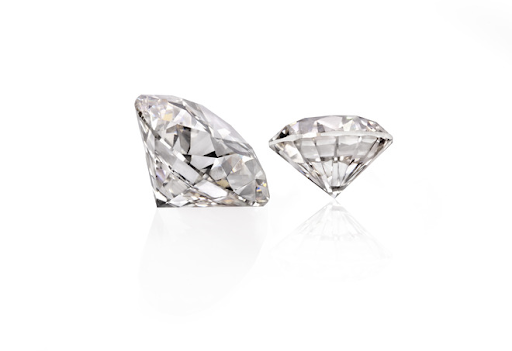
Lab-grown diamonds made by Washington Diamonds (not memorial diamonds)
Credit: Wikimedia Commons, Washington Diamonds Corporation
For families navigating grief and end-of-life preparations, the idea of transforming a loved one’s cremation ashes into a jewel as precious as a diamond can be a source of comfort. Diamonds are valuable, tangible keepsakes that can symbolize connection and memory.
Over the past two decades, companies have claimed to specialize in “cremation diamonds,” or lab-grown diamonds, advertised as being crafted from the carbon remaining in human ashes.
However, many in both the jewelry and funeral industries allege these diamonds may not be possible to create from the carbon remaining in cremains alone. Form to Feeling, a jewelry brand in Austin, Texas, associates them with “preying on your grief.” A debate has arisen about scientific plausibility, marketing ethics and transparency of cremation diamonds.
The memorial diamond industry’s claims
Memorial diamonds are processed using existing lab-grown diamond technologies, such as a high-pressure, high-temperature (HPHT) synthesis, which mimics the process by which natural diamonds are formed. In a lab, the element carbon is deposited onto a “seed crystal” under extreme temperatures and pressures to create a new diamond. Some companies assert that they can extract the carbon from a loved one’s cremains or hair and convert it into the carbon source for the lab-grown diamond.
These services are marketed through both funeral homes and direct-to-consumer channels such as shopping websites. They use emotionally-charged language, encouraging loved ones to “keep their legacy alive” or “turn their ashes into a diamond.”
Memorial diamond scientific skepticism and concerns
Critics question the scientific accuracy and reliability of utilizing carbon from cremains. The debate centers around whether sufficient carbon remains in cremated ashes to even form a diamond.
Human bodies are around 18% carbon by mass, but most of the carbon is lost during cremation in the form of carbon dioxide gas. Most standard cremation furnaces operate at around 1600-1800 degrees Fahrenheit, which is above the temperature at which carbon mostly burns away, which leaves very little organic carbon to work with.
Is it enough for a diamond?
An independent analysis by Global Claims Associates, explains that the cremation process destroys virtually all carbon and that the memorial diamond companies are certainly aware of this fact. The report also states that the patents from these memorial diamond companies acknowledge that “conventional cremation eliminates most of the native carbon” and suggest adding carbon from outside sources if necessary.
Additionally, Form to Feeling jewelers suggest that memorial diamond companies mix external carbon with cremains before synthesis, so there is no way to guarantee that the final gem is composed exclusively of a loved one’s carbon. There is also no way to verify that the company used such carbon at all.
Scientists also indicate that while some carbon can survive cremation in bone mineral fragments — they have even been able to carbon-date cremated bones — there may not be a large enough source to create a diamond.
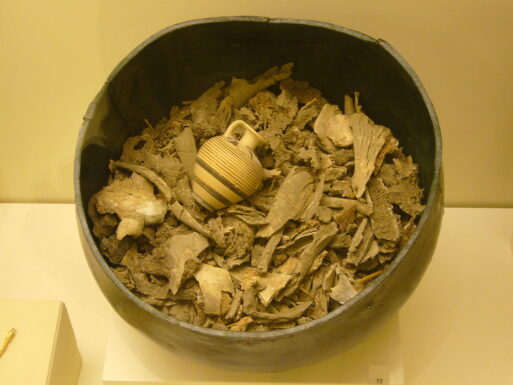
Ancient cremated human remains on display in a museum in Crete, Greece
Credit: Tom Oates, Wikimedia Commons
Testing and certification of memorial diamonds
Another challenge that memorial diamonds and families face is the ability to verify the carbon source of the diamonds that are created. Gemological institutions such as the Gemological Institute of America (GIA) and the International Gemological Institute (IGI) can verify that a diamond was lab-grown, but not what carbon source was used, including whether it was made from cremains at all.
That means consumers interested in a memorial diamond must trust that the company is using accurate and ethical claims and processes to create the diamond. Because grieving families can be emotionally vulnerable, critics question the ethics surrounding these companies, especially since lab-grown diamonds that claim to contain carbon from remains are sold at prices “up to 10 times more than the price of an open-sourced, lab-created diamond of the same size, quality, color and cut,” according to Form to Feeling jewelers.
In conclusion
Critics of memorial diamonds recommend exercising caution and due diligence when memorializing loved ones. Since there is no true way to verify if companies can actually source enough carbon from a loved one’s remains to create a diamond, or if the diamond was actually created with this carbon in the first place, families should be aware of the risk before paying exorbitant prices.
Other forms of memorial jewelry incorporate ashes or remains without unprovable scientific processes. While lab-grown diamonds are real and made from authentic materials, the core claim of being able to create one from cremains has continued to be disputed, debated, and scientifically unverified.
Transparency about processes and expectations can help families make informed decisions during the grieving process. For those exploring memorialization options, researching unverified claims and consulting with trusted professionals in the funeral and gemological fields can make a major difference.





 Final Messages of the Dying
 Will I Die in Pain?