The Science of Death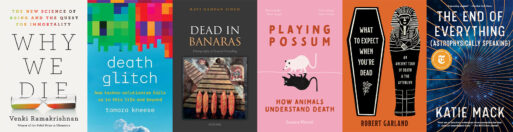
Image from science.org
A new, limited podcast from Science, a magazine published by the American Association for the Advancement of Science, will explore death from a variety of scientific perspectives, a “hot topic” right now, as noted in the short preview of the series on April 25. Hosted by journalist Angela Saini, the series will air monthly, and feature conversations with the authors of six books that tackle the universal condition of mortality. Each episode promises unique and specialized insights into the science of death that range from biological to technological and expand to the ticking clock of the universe itself.
The biologist
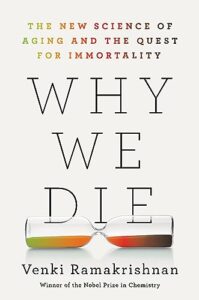 Viewed from the perspective of biological science, “Why We Die: The New Science of Aging and the Quest for Immortality,” by Nobel Prize recipient Venki Ramakrishnan, incorporates both established findings and innovative research to explore not just the possibilities and limitations of extending the human lifespan but the ethical questions raised by our attempts to do so. Peppered with personal insights on the nature of aging and death, “Why We Die” has won the 2025 Association of American Publishers’ PROSE Award for excellence in the biology category.
The historian
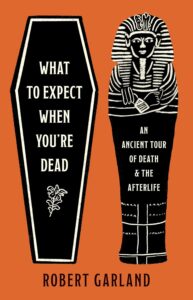 Informed by emergent scholarship on the sociology, archaeology, literature and art of death practices from an expansive range of cultures, “What to Expect When You’re Dead: An Ancient Tour of Death and the Afterlife” by author Robert Garland presents an immersive journey into the customs, practices, and beliefs of ancient civilizations. Employing both humor and insight, Garland offers a glimpse of a world whose practices still reverberate today, and explores what that world might still have to offer our modern society.
The media scholar
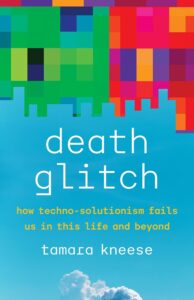 On the other end of the human timeline, “Death Glitch: How Techno-solutionism Fails Us in This Life and Beyond” by Tamara Kneese examines the de facto death denialism of modern technology. With a substantial portion of our lives now lived online, there is a dearth of mechanisms designed to manage digital possessions, profiles and accounts after we die. Examining social media memorialization, AI chatbots promising immortality, data cloning and more, “Death Glitch” explores the inherent confrontation between our messy human lives and the innately ordered, seemingly infinite realm of our ever-expanding technological existence.
The sociologist
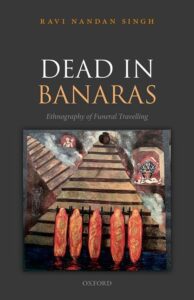 In the Northern Indian city of Banaras, thousands of people arrive with a simple purpose: to die. Death is woven into the fabric of Banaras; open air pyres sit aside modern crematoriums along the banks of the holy river Ganges. This metropolis of mortality has earned its reputation as a site of pilgrimage for the dying due to an ancient Hindu belief that dying there liberates one from the cycle of death and rebirth. “Dead in Banaras: An Ethnography of Funeral Travelling” by Ravi Nandan Singh was intended to chronicle the practices, history and funerary phenomena of the city, but took a more personal turn when, while writing it, his own father died.
The philosopher
 Death is not unique to humans, and the podcast doesn’t neglect our nonhuman cohabitants of Earth. “Playing Possum: How Animals Understand Death” by Susana Monsó, a leading expert on animal cognition and ethics, “tells the stories of ants who attend their own funerals, chimpanzees who clean the teeth of their dead, dogs who snack on their caregivers, crows who avoid the places where they saw a carcass, elephants obsessed with collecting ivory, and whales who carry their dead for weeks,” according to Princeton University Press. Philosophical, engaging and insightful, “Playing Possum” erases many of the psychological boundaries we tend to place between ourselves and the rest of the animal kingdom.
The cosmologist
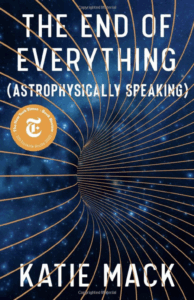 Rounding out the series (and substantially expanding its focus) is “The End of Everything (Astrophysically Speaking)” by cosmologist Katy Mack. Operating on the premise that the universe having a beginning implies it will most likely have an end as well, “The End of Everything” journeys through five possible universe-ending scenarios, and examines which seem most likely according to cutting-edge particle physics and astronomical observation.
The inaugural episode of the podcast series will air at the end of May and continue for the subsequent five months. It can be found at Science.org in the podcast section.





 Final Messages of the Dying
 Will I Die in Pain?