“The Ones We Couldn’t Be” Music Review: Writing the Ballad Helped Bonnie Raitt Work Through Her Grief
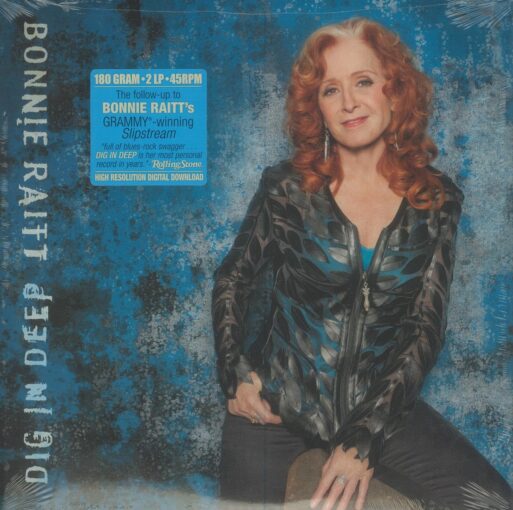
Seasoned singer-songwriter Bonnie Raitt has always had a gift for turning heartache into poetry. And her song “The Ones We Couldn’t Be” from her 2016 album “Dig In Deep” is no exception. At the surface, the song is seemingly a tender reflection on love and loss. But listen a little more carefully, and you’ll hear that it carries the weight of regret and grief. Although Raitt’s song sounds as if it could be about a broken affair, the song still resonates with anyone who has lost someone, regardless of whether the loss was through a breakup, distance or death. This was the ballad that helped Bonnie Raitt work through her grief.
Raitt’s Album Like a Therapeutic Memoir
Although fans around the world revere Raitt’s songwriting abilities, she’s admitted that it’s not a skill that comes easily to her. But when it came to co-writing 5 out of 12 songs on “Dig In Deep” — an unusually high number of songs for an artist to co-write on their album — she credited her prolificity at the time to her taking a much-needed hiatus to deal with her grief. In February 2005, her father, acclaimed Broadway singer-actor John Raitt, died due to complications from pneumonia after a prolonged illness, just months after she lost her mother, pianist Marjorie Goddard, to Alzheimer’s disease.
“I don’t write often and easily,” she told Billboard. “This particular time after a period of about 10 years when my family — my parents and my older brother — were all ill and passed away in a short period of time … I was pretty fried, and I took 2010 as a complete break from thinking about what I wanted to do next. After all that loss, to finally have the time and freedom and not have to be worrying about family members, I had more opportunity to write.”
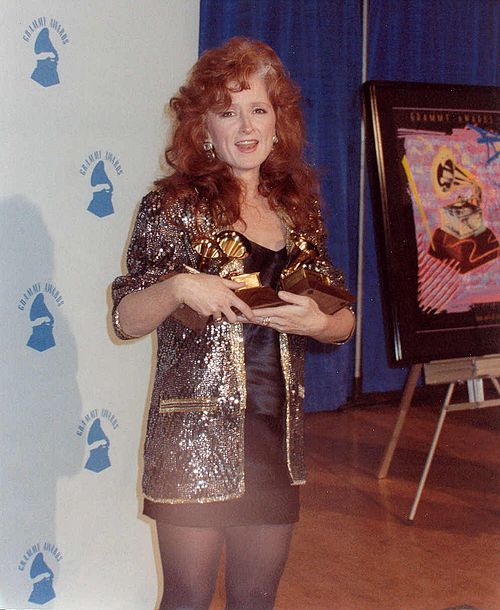
Bonnie Raitt wins another award
Credit: Alan Light
Raitt also spent that time working on processing everything she’d been through recently. She did “some grief work with a support person,” and she “just really felt all the things that had been pushed aside by all that loss and trauma.” She “came out of it really grateful.”
“The Ones We Couldn’t Be”
Described by American Songwriter as the album’s “closing weeper,” the melancholy ballad “The Ones We Couldn’t Be” is stripped down to feature Raitt’s powerful vocals accompanied by a piano. The song is about being genuinely sorry and eventually being able to forgive yourself and someone else for their shortcomings — even after the relationship is over.
Purposefully taking poetic license to mix up metaphors and meanings, Raitt told Billboard she wanted to express a feeling of remorse about the fact that “we can’t be what others want and even need us to be,” regardless of the type of relationship. “One verse refers to a love relationship gone awry. Another is about family misunderstandings.”
In an article for the Journal Star, Raitt said the song’s second verse is about her family members. “I know they were sorry they couldn’t be what I needed and I was sorry I couldn’t live up to the expectations. And at the time when the relationship’s not working or you’re under stress, you tend to put blame not necessarily where it’s really accurate — it’s all about them, if only they acted different — so the reckoning that happens years later is you realize you both just did the best you could.”
Looking through these photographs
Searching for a clue
How you and I got tangled from the start
Not even blood could forge a bond
Enough to get us through
Or stem the tides that pulled us far apart
I’m sorry for the ways I couldn’t give you
What you needed
For all the ways I strung us both along
They say it goes both ways and I suppose
I could concede it
Seems to matter more, now that you’re gone
Finding Renewed Strength
In an interview for Chron from November 2005, shortly after Raitt lost her parents, she reflected on how the recent loss affected her performances. “This will be the first holiday season I will have both parents gone. It’ll be very, very moving for me.”
“But lately,” she continued, “I’ve been singing with … well, I don’t want to say ‘renewed vigor.’ I haven’t lost my voice. But I feel like I’m singing with them in me now. I don’t want to sound too metaphysical, but it’s just there.”
Raitt’s turning point, of sorts, in which she went from being unable to even think about her mom — “just losing it when I did” — to being able to carry that grief differently, is something that many people experience after loss. There comes an indefinable time when the sadness is less overwhelming and you’re once again able to find joy in the person’s memory. Perhaps for Raitt, the grief work she did while on hiatus helped her find her way through her complicated relationships, and the forgiveness found in “The Ones We Couldn’t Be” was the result.





 Final Messages of the Dying
 Will I Die in Pain?