Meaningful Things to Consider After the Sudden Death of a Loved One, Prior to Making Final Arrangements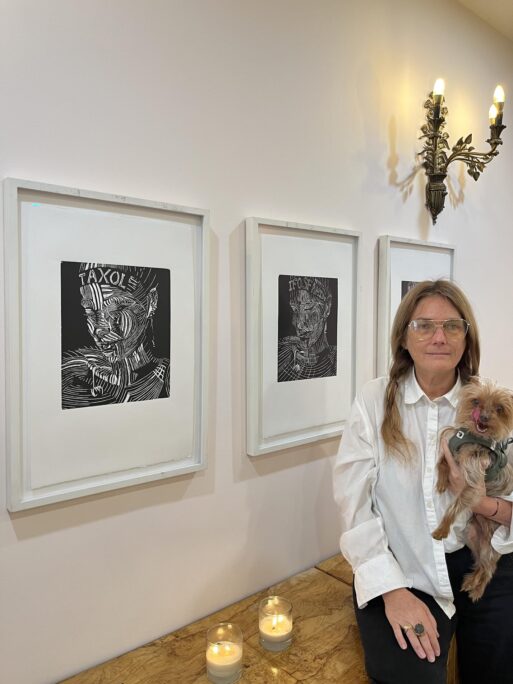
Erica Hill at Sparrow, her luxury modern funeral home in New York City
Credit: Erica Hill
With a background in video production, merchandising, and philanthropy, Erica Hill’s passion for storytelling is evident when she helps families say goodbye to their loved ones. The funeral ceremonies she has helped conduct at Sparrow located in New York City — “a luxury modern funeral home” — have run the gamut from simple and sparse to intimately elaborate, but each one has been crafted to the individual needs and wants of her clients.
Hill’s interest in providing more adaptable funeral services was born through her own experiences with loss over the years. After attending funerals for friends and feeling like the events weren’t what they would have chosen or even wanted, Hill came up with Sparrow as a place where she could help other families design a ceremony that truly honored their loved ones.
In her role providing customized funeral services, Hill has experience with some of the more unique requests families have made to memorialize their loved ones. She graciously shared some of those details, and offered advice for anyone who might be unexpectedly faced with planning a funeral service.
This interview has been edited for length and clarity.
Sometimes death occurs as a sudden, tragic event, coupling trauma with everything else you might go through. Do you have a lot of experience dealing with people who are trying to process this kind of loss?
I have a fair amount, even only having been in the funeral business for about 4 years. I don’t have a 20 year career in the funeral services, like some other people might, but I have had a lot of friends die through the years, which was the impetus for starting Sparrow. Because I would go to funerals, and I didn’t feel like they reflected the person, especially peers who died when I was a teenager, in my 20s, or even into my early 30s.
So I have my own experiences with that sort of thing, and then, at Sparrow — because we do look a bit different — we tend to get younger people into our care. I can speak to that, certainly.
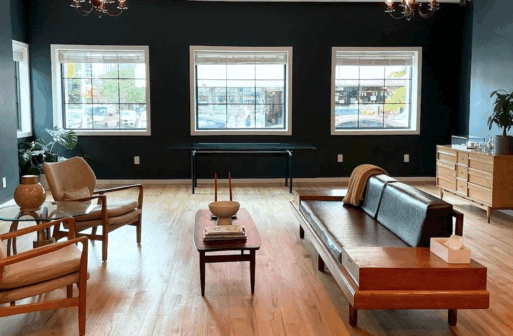
A mid-century inspited sitting area at Sparrow
Credit: Erica Hill
What are some of the differences between caring [planning a funeral] for a person who died when they were younger, versus older people?
Honestly, the biggest difference is the grief that you see the family going through feels different than grief for someone who has lived a long life. That feels more like “cycle of life” than a life cut short. We certainly have families who have lost a mother, grandmother or whoever that want to celebrate them fully. What makes Sparrow unique is that our space can very much become a big reflection of the person who has passed away.
But death and grief are so personal and individual to each family, and we try to encourage people to bring in things that were important to them. We had a 16 year old who died, and he loved makeup and skincare products, so we set up a kind of vanity for him. The whole entryway to the funeral home was photos of him through the years, displayed chronologically, which was really cool. And he loved to make paper cranes, so there were colorful little origami paper cranes hanging everywhere.
And then we had another younger person who died, who loved their clothes. So we recreated their whole closet here. We try to work with families to make a space that feels like that person is very present, and you get a sense of who they were and how they lived their life.
And sometimes with the families who’ve lost younger people, they actually want it as simple as possible — which is surprising. We had a funeral for a 19-year old, for example, whose parents didn’t want anything like that. And we just had a service for a 13-year old that had a few photos and his teddy bears and stuff, but in the actual room where he was, it was very sparse.
So, it goes back to what feels right for the family in their grief process. We try not to put our expectations onto the families, and just let them talk and see what feels comfortable for them.
We wanted to address meaningful things to consider after the sudden death of a loved one, prior to a family making final arrangements. When families suffers an unexpected death they can be unable to collect their thoughts on what they might do to preserve some physical aspect of their loved one, like a keepsake? We came up with a few ideas, and want to know what you think:
- Cut a lock of hair
- Perform a DNA test
- Choose to keep the clothes or jewelry the loved one was wearing
- Fingerprints, as a plaque, to make jewelry, or printed as artwork
- Footprints, as a plaque, to make jewelry, or printed as artwork
- Make a cast of the face in plaster, wax, or bronze
- Select a bone from the cremains to keep [if permitted by the state regulating the cremation process]
We’ve definitely collected locks of hair for families; we do those a lot. And we have done imprints and molds of hands or feet, and taken fingerprints, and other stuff like that.
And people almost always want their clothes back. We will wash or dry-clean them, of course, and then return them. We had a younger person die, and the sweater he was wearing happened to be his mom’s favorite sweater that he owned, so she was determined to get that back before he was cremated. 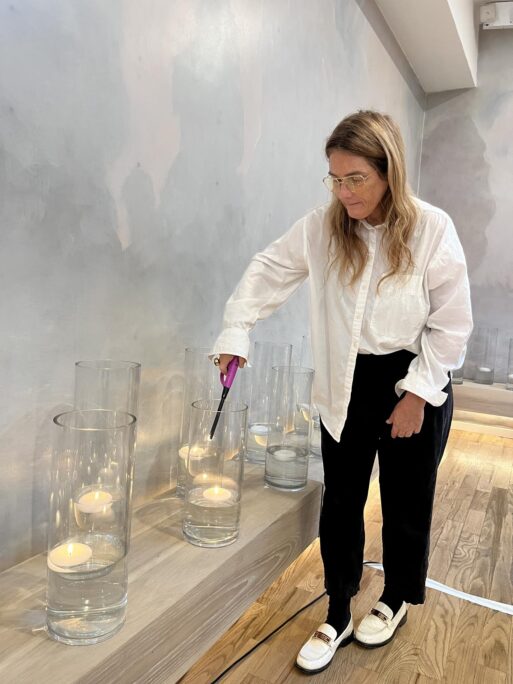 I own a direct cremation business back in Los Angeles, and we’re always ensuring that people get any jewelry back that the person was wearing. We’ve never done a DNA test, that I’m aware of, and we’ve never done a cast of someone’s face, but I think that is an interesting idea.
What we did once, which was fascinating, we had a Japanese family, and they wanted to perform a tradition of picking through the bones after the person is cremated, and stacking them.
[Ms. Hill couldn’t recall the word for this tradition, so we looked it up. It is Kotsuage, which combines elements of Shinto and Buddhist practices. According to the site Scattering Ashes: “Once the cremation is complete and the ashes have cooled, family members, two at a time, use large chopsticks to remove the bone fragments. This process starts at the feet and moves upwards, ensuring the remains are placed in the urn in an upright position. This practice symbolizes respect, ensuring the deceased is not placed upside down. The most sacred and significant bone is the hyoid bone, located in the neck – likely due to its symbolic connection between the brain and the body.”]
Legally, when ashes come back from the crematory they [usually — though this varies from state to state] cannot have any identifying bones in them -– the crematory isn’t doing their job correctly if you can identify any pieces of bone. Here in New York, there’s only one crematory that will do it, and they’ll only allow you to keep 5 bones. So it looked very different than if we were in Asia, but we did that, and it was fascinating.
And of course, we have a lot of people, here and in Los Angeles that prefer to witness the cremation.
So, for anyone who might come to you for help caring for someone who has died really suddenly, and they seem really lost as to what to do next, what is some advice you might offer?
I mean, it’s a funny role to be in, because… we’re not therapists. Sometimes people are so stuck in a fog when a loss like that happens. But when I’m talking to families, if someone is having a really hard time because the death was unexpected, I talk to them about how to get grief support, primarily. And sometimes it’s just getting them to talk about their person. It helps them, a bit.
Because I’m licensed in California, not New York, I have more contact with families there. But oftentimes people just need somebody to talk to, and they just unload a lot, and it’s our job to listen. And sometimes I just tell them that they’re doing the right thing. Especially when it’s someone younger, and they’ve never discussed what that person would have wanted. So just assuring them that they’re — as cliché as it sounds — they’re doing the best they can do, and they’re doing a good job. It’s a lot to take on, and they should feel good about how they’re handling everything.
But you know, when somebody dies, it’s not like the funeral is the next day. Oftentimes, it’ll be later, a minimum of a week, sometimes two weeks, and they tend to rely heavily on the funeral director.
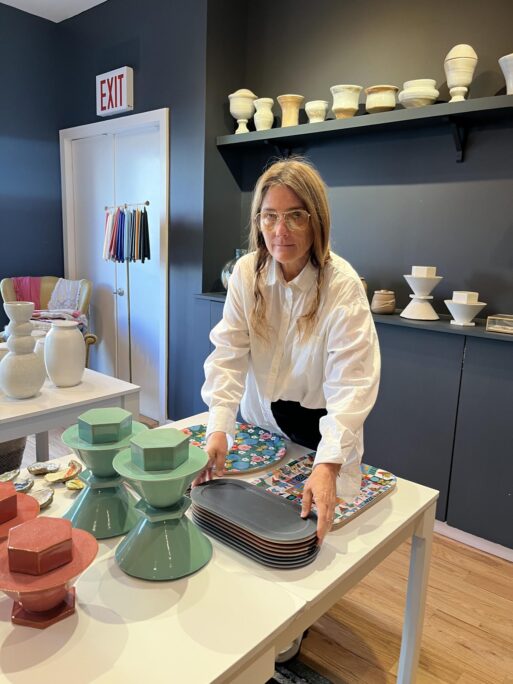
Erica in the store within Sparrow that sells contemporary cremation urns, books
and grieving products
Credit: Erica Hill
What, would you say, is important for families to consider when they are preparing to have a funeral?
Remember that there’s no right or wrong way to do it, and that you can ask for things that feel important to you — even if it’s not something that the funeral home might have brought up.
If the person who died was younger, or it’s an unexpected death, it’s a very odd time in people’s lives. I think families are often in shock, and they never imagined having to do this for their child, for example. And I think one of the reasons the funeral industry has such a bad reputation is because people aren’t thinking clearly, and a lot of funeral homes are just used to what they’ve done for a long time. It’s become kind of “rinse and repeat.” And I don’t mean that negatively towards anybody — I fully understand why it’s like that — but I think it’s really important for families to understand that they can advocate for things that are important to them, whether that means having a green burial even if it’s in a traditional cemetery, or wanting to have more personalized things at the funeral than just a slideshow.
Don’t be afraid to ask for the things that you want, or think might be important.
We had a gentleman die in his early 40s, and his husband was absolutely devastated. He really wanted to wash him, and so we came the night before the funeral, and we set up the whole room with candles. His husband’s favorite color was pink, so we got pink sponges, pink towels, and he spent almost an hour thoroughly washing his husband’s body.
A lot of times, when we talk about washing the body, it’s usually more of a symbolic ritual, where the family might lightly wash a hand or a foot. But this man, he lovingly washed every inch of his husband. And we had gotten two different pink fabrics to use as a shroud, and then he was placed in a woven casket, without a cover. His husband wanted to make sure he was grounded, so the casket was placed on the floor, surrounded by pink flowers. It was really beautiful. And then after the ceremony, we handed out pink flowers to the guests so they could place the flowers on top of him, and that’s how he went to the crematory: Just covered in flowers. It was really, really special.
You can choose the right time to have a ceremony.
There’s no time frame here. So you could choose the celebration of the person to be six months later, a year later… it doesn’t have to be in a 2-week period. For some people, having a ceremony right away is important because it brings the community together.
But it goes back to the fact that everybody is so different. One of my close friends lost her son almost two years ago, and it took them a while to have a ceremony; they didn’t do anything right away except for his cremation. My friend couldn’t have handled a funeral, or any kind of gathering in those first few months. They wouldn’t have been able to be present in any real way.
Thank you Erica for your insightful experience and tips!





 Final Messages of the Dying
 Will I Die in Pain?