Has Death Gone Disney? Former Disney Star Sparks Controversy Over New AI App — Or Grief Trap?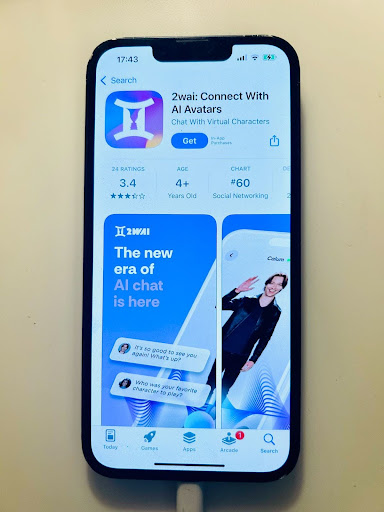
The new era of AI chat is here. Should we be alarmed?
image: Maria Mocerino
In reflecting on the promo video for his new app that disturbed many on November 11, it’s fitting that Calum Worthy is a former Disney star.
The video, which went viral, triggered a flat-out rejection of the digital resurrection as “creepy” and “demonic,” according to video reportage by Inside Edition. Fascinating, considering the bright nature of the sentiment behind the app, as if it weren’t a problem rooted in darkness but lightness, or fantasy, a multi-billion dollar industry for Disney. In this case, it’s the precarious fantasy of pretending that someone is still alive.
The demand practically crashed their servers though, Worthy said, as 2wai isn’t the first avatar platform of its kind to be marketed to a growing demographic searching for this product.
The New York Times tackled the “growing field known as Grief Tech” by reporting on a family who discovered that their patriarch had a year to live. They decided to preserve his memory virtually, though they didn’t create a 3D avatar, but rather a replica of him that blurred the line between real life and screen as if they were “calling him on Zoom.”
Tumultuous feelings emerged within his son, fooled by how real the experience felt, then thrown back into the real — it was just a “rendering.” Along those lines, Inside Edition consulted a tech expert who feared the “trap” that people might really believe that they are talking to their grandmother. Instead of dissolving the line between reality and fantasy, could AI ghosts lock people into their grief, causing a disorder known as “complicated grief?”
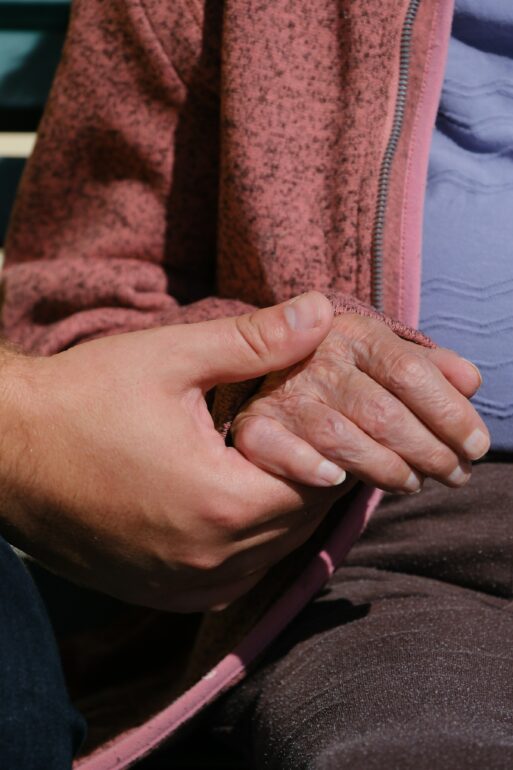
It’s natural for humans to want to preserve connection with loved ones after they have died. AI avatars offer an artificial sense of connection, and may lead to complicated grief.
image: Marco J Haenssgen on Unsplash
Both Time Magazine and the Hastings Center of Bioethics expressed that humans have always tried to keep a line of connection with the dead. Ninety-six percent of people chose to engage with them “through dreams, conversations, and letters.” Worldwide, telephone booths continue to be installed, where people can “call” their loved ones on “a real phone.” But it’s the video that presents a false hope: “look, it’s really them.” The apps might argue that’s not really true, but that’s the idea these services hinge upon.
Elaine Kasket, a cyberpsychologist and author of All the Ghosts in the Machine, argued in Time Magazine that “scrubbing away” the “difficulty and mess and pain,” suggesting that these apps could provoke “a lightness of being,” which might lead some of us, at least, to “…pathologize and problematize the natural finitude and impermanence of carbon-based lifeforms such as ourselves.” Is there an argument for death, in that, our lives end, and we have to deal with that?
Not according to China.
The market is “particularly strong in China,” according to MIT Technology Review. That’s how they’re dealing with death. Ghost avatars are being “consumed” by the thousands, a verb that alludes to a final argument made by the Hastings Center of Bioethics, that, “we must decide,” as a society, “whether the free market should dominate this space and potentially abuse our grief.”
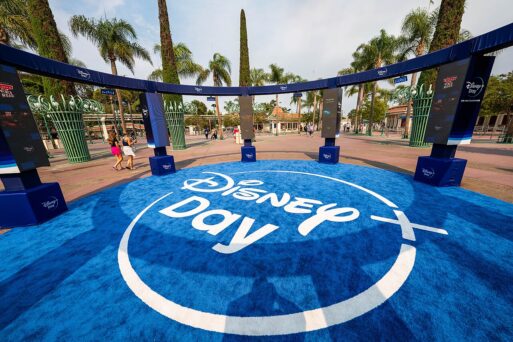
Disney owns and operates the most popular theme parks in the world.
image: Anthony Quintano
“Should companies be able to create AI ghosts and then try to sell them to us, operating like an amusement park…” that takes us on a ride? They wondered whether “grief-bots should be considered therapeutics,” subject for approval by the FDA, and even prescribed as a treatment—for grief? Like it’s an illness? It’s not. Not unless it becomes one…? Are these avatars suggesting that?
“The starting point should be clinical studies on the effect this technology has on the grieving process, which should inform legislators and regulators on the next steps: to leave AI ghosts to the marketplace, to ban them, or to regulate them.”
Are AI avatars a deceptive fantasy or a support tool to truly cope with death? We don’t know. Should we allow companies to capitalize on this potentially troublesome technology? That’s the question.





 Final Messages of the Dying
 Will I Die in Pain?