New York Passes Medical Aid in Dying Act
New York’s Medical Aid in Dying Act was signed into law on February 6th, 2026
Credit: thecorgi via Canva Pro
On February 6, 2026, Governor Hochul signed New York State’s Medical Aid in Dying Act, which will go into effect on August 5, 2026.
The legislation comes after an extensive legal battle. In 2017, three terminally ill patients became plaintiffs in a high-profile constitutional challenge to, at that time, the state’s existing ban on assisted suicide. The state held that there was no constitutional right to end one’s life.
NBC New York reported, “The plaintiffs had argued that the state’s existing ban on assisting a suicide shouldn’t apply to those seeking merciful ends to incurable illnesses.”
The court disagreed, noting that while state law allows terminally ill patients to decline life-sustaining medical assistance, it does not allow anyone to assist in ending patients’ lives. “The assisted suicide statutes apply to anyone who assists an attempted or completed suicide,” the court wrote in its unanimous decision. “There are no exceptions.”
While there is a differentiation between Medical Aid in Dying, in which patients take life-ending medication themselves, and Physician Assisted Suicide, where a healthcare professional would actively give that life-ending medication, the 2017 case set a precedent that took decades to overcome.
With advocacy from a variety of groups, including Compassion and Choices, Death with Dignity, and the New York Civil Liberties Union, as well as some compromises between Governor Hochul, the legislature, and concerned constituents, the legal conflict culminated in February’s passage of the act.
To assuage concerns about coercion and patient safety, Hochul and the New York legislature reached an agreement on the bill by adding safeguards. Some of these are:
- Physician-assisted dying is only available to those living in New York State.
- 5-day waiting period between when a physician writes a prescription and when the pharmacy fills it.
- Required mental health evaluation
- The patient’s request must be recorded in audio or video format.
- The witness or interpreter cannot be someone who stands to gain financially from the person’s death.
- In-person physical
- Opt-out for religious healthcare providers
According to Spectrum News 1, some religious groups, including the New York Catholic Conference, as well as some disability advocates, such as the Center for Disability Rights, remain opposed to the legislation. The Center for Disability Rights and other advocates have raised concerns around abuse of the practice and coercion of disabled New Yorkers. In a July Politico article, Rep. Elise Stefanik stated she had reservations in part due to the state’s low use of palliative care and hospice.
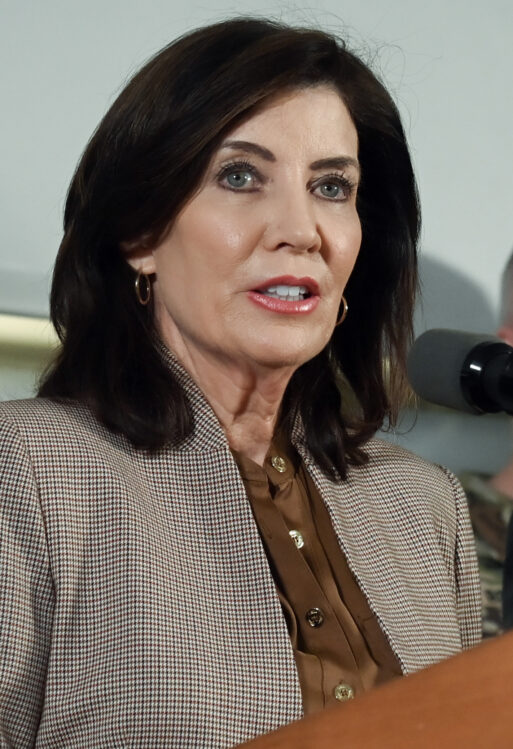
Governor Kathy Hochul
Credit: Marc A. Hermann / MTA via Wikimedia Commons
Hochul had her own reservations based on her religious upbringing. According to Politico, in an article covering the Act, the Governor said she felt the initial safeguards weren’t enough; she wanted them shored up before she would sign the Medical Aid in Dying Act into law. After negotiations, Hochul ultimately chose to sign because she felt the act supported medical autonomy. In her announcement on the New York Governor’s website, she shared,
“My mother died of ALS, and I am all too familiar with the pain of seeing someone you love suffer and being powerless to stop it. Although this was an incredibly difficult decision, I ultimately determined that, with the additional guardrails agreed upon with the legislature, this bill would allow New Yorkers to suffer less–– to shorten not their lives, but their deaths.”





 Who Cares for the Caregivers?
 Final Messages of the Dying