Scotland Will Be One of the First in the UK to Regulate Water Cremation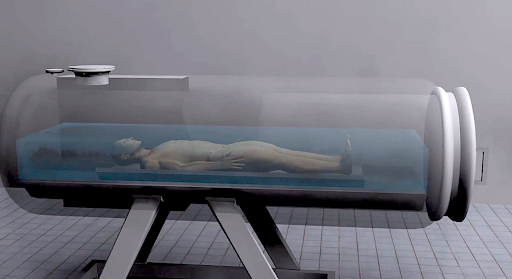
a simulation of the water cremation process
credit: Israkress, Wikimedia Commons
Scotland is soon to join the ranks of countries, including over half of the United States, that offer alkaline hydrolysis, commonly dubbed as water cremation by the funeral industry, as a form of body disposition after death. It will be the first alternative to burial regulated in Scotland since the first cremation in 1895.
A public consultation in 2023 yielded an overwhelmingly positive response from Scottish society regarding the introduction of this new burial method. Over 84% responded with approval, leading the Scottish government to move forward with finalizing it as a funeral option.
“We expect this to finalise through parliament by the end of the year,” Andrew Purves, COO of William Purves Funeral Directors in Edinburgh, stated in an interview with The Times. However, he goes on to explain, “I do not believe anyone has, as yet, built a facility to carry out the procedure, so that would take a further period before we actually see such funerals happening.”
When water cremation is officially legalized in Scotland, it will be the first country in the UK to do so; however, discussions about legalization in England have also begun. Ireland is the first country in Europe to regulate it.
Water cremation, more accurately known as alkaline hydrolysis or aquamation, was first introduced as a burial alternative in 1888, but was modernized and introduced to the United States funeral industry in the early 2000s.
Alkaline hydrolysis involves breaking down the body with heat and water in a chamber similar to a cremator (a cremation chamber). “Using a heated, alkali-water-based solution (think diluted soft soap), the process reduces the body to bones,” explained Dr. Georgina Robinson of Durham University. These bones are then crushed and returned to the family, similarly to a traditional cremation. The process takes roughly several hours, around the same time as flame cremation.
In addition to crushed remains, the water left behind can also be returned to the family. Due to its rich nutrient content, this fluid can be used as a natural fertilizer. Families can use it in their personal gardens as a means for their loved one to “return to the Earth.”
a return to the earth
credit: Eino on Unsplash
Water cremation is considered a more environmentally friendly method compared to traditional cremation. According to advertisements, it “uses less energy and produces 90% less carbon emissions than traditional cremations.” Water conservation is another matter, however, as it is estimated that 1,300 liters (343 gallons) of water is used per body, though the remaining water is sterile and can be returned to water systems if families do not want it.
Scottish approval of this burial alternative stems from its environmental appeal and cost, among other personal preferences.
Scotland’s Burial and Cremation Act of 2016 enables the country to introduce new regulations and frameworks for emerging technologies related to burial and body disposal methods, including aquamation. This act makes regulating burial alternatives easier.
Member of Scottish Parliament and Minister for Public Health Jenni Minto stated, according to The Times, “We are currently developing regulations that will set out the required administrative procedures to include hydrolysis as an alternative to burial or cremation. These will be laid in the Scottish parliament for consideration later this year.”
Alternative burial methods, particularly eco-friendly ones, are gaining popularity worldwide. Introducing these methods safely can add a meaningful and personal touch to end-of-life plans for loved ones and their families.





 Final Messages of the Dying
 Will I Die in Pain?